The Gulf’s hard lesson: Partnerships measured by stance



شارك على
 مسنجر
مسنجر
 واتساب
 ثريدز
ثريدز
 بريد إلكتروني
 الطباعة
شارك على


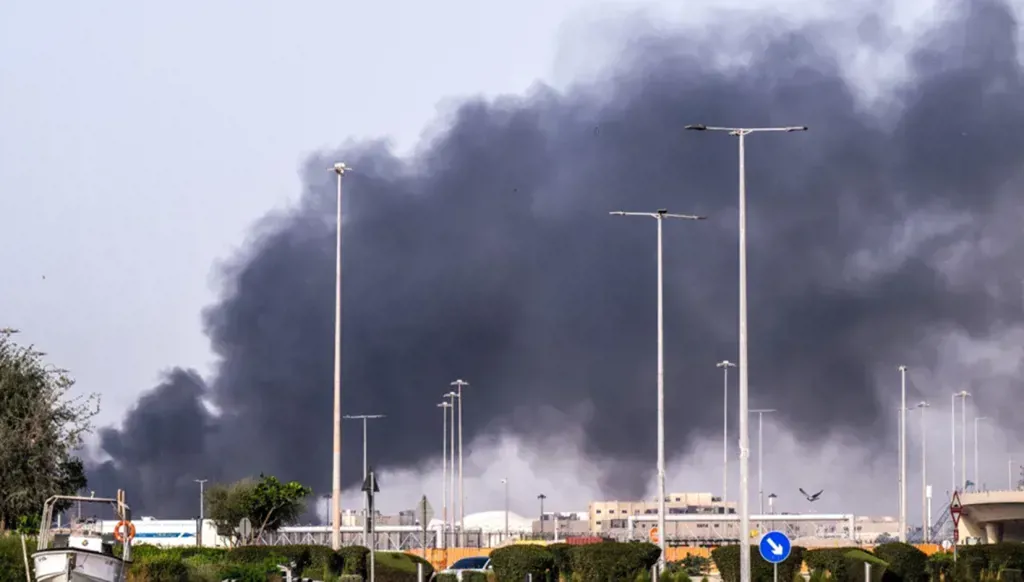


The Iranian attacks on the Gulf have put Arab and Islamic institutions to a direct test. What happened was not merely a political escalation that could be addressed with bland statements, but a direct targeting of Gulf countries, extending to other Arab nations like Jordan, and a clear threat to supply chains and the economy. Yet the institutional Arab and Islamic voice remained weak, scattered, and delayed, as if the threat were occurring in a distant region that does not affect the entire area.
Where was the Arab League, and where was the Organization of Islamic Cooperation when Gulf countries were explicitly attacked? No armies or emergency alliances were required, but at the very least, organized political action was needed: an urgent meeting, a clear stance, and rhetoric that held the attacker accountable without hesitation. When regional and international organizations delay this minimal response, they leave space for narratives that justify the aggression or downplay its seriousness, shifting the discussion from clear condemnation to ambiguity that blurs the lines between aggressor and victim.
The weakness did not stop at the institutions. More dangerously, this weakness was not merely silence. In some Arab and Islamic circles, there was even sympathy for Iran as a party confronting the West and Israel, even when this came at the expense of Gulf cities, civilian facilities, infrastructure, and the livelihoods of millions. Here, a cultural crisis emerges before a political one. Some reduce the entire region to a single duality, treating everything else as a detail that can be overlooked. This perspective renders aggression justifiable when it is cloaked in the Palestinian cause or framed as confrontation with the West and Israel. This is neither a moral stance nor a realistic reading, but rather a clear rationalization of aggression when it aligns with ideological desires.
Another, less often spoken reason underlies this hesitation. The success of the Gulf model—economically, developmentally, and institutionally—has unsettled ideological narratives that have failed to build modern states. When internal projects falter, some environments look at a successful model with hostility or bitterness. Thus, part of the Arab and Islamic hesitation can be understood not only as incapacity but also as a mix of narrow calculations and resentment toward Gulf success—something that certain parties are unwilling to acknowledge.
The delay was not limited to Arab and Islamic institutions; it extended to international action as well. Even the United Nations took nearly two weeks to respond with Resolution 2817, addressing the security of navigation and supply corridors through the Strait of Hormuz. This international delay highlights the failures of institutions closer to the crisis, as they did not initiate even the minimum political action. When regional bodies hesitate in such moments, they not only lose credibility but also force their member states to reorder priorities and act based on direct calculations.
From this experience, the Gulf emerged with a clear political conclusion. The independence of national decision-making is no longer deferrable; it has become a necessity that shapes how relationships are built and partners are chosen. Those who stand in times of hardship are true partners, while those who hesitate, evade, or justify aggression will pay a political price in the post-war phase. The Gulf will not abandon its environment, but it will no longer view relationships through the same old logic. From now on, the decisive criterion is stance, because moments of being targeted reveal the reality of partnerships more than any rhetoric ever could.
The attacks on the Gulf do not threaten a single state alone but have implications for broader Arab stability. The Gulf is not an economic periphery that can be ignored; it is a hub of financing, employment, investment, and markets, with energy and supply routes on which many Arab capitals rely daily. Therefore, hesitation in condemning aggression not only harms the Gulf but also reflects on the interests of countries that chose silence or merely observed. It is regrettable that nations that have benefited for years from Gulf support—financial, humanitarian, and political—could not express a political stance commensurate with the level of targeting at this critical moment.
This is not a call for a boycott, but a call for clarity. After this war, relationships will be built on stances, and those who wish to have a role and presence must prove it when the region is under attack. Those who persist in hesitation will find that others are already setting the balance without them.
Disclaimer: The opinions expressed by the writers are their own and do not necessarily represent the views of Annahar.
العلامات الدالة
الأكثر قراءة