

Iran’s shrinking options in an expanding war
Instead of strengthening its regional position and safeguarding its country by placing its people on a path of political, social, scientific, technological, and economic development, the Iranian regime has squandered its resources...



 Messenger
 Whatsapp
 Threads
 Email
Email
 Print
Print
 X
X
 Facebook
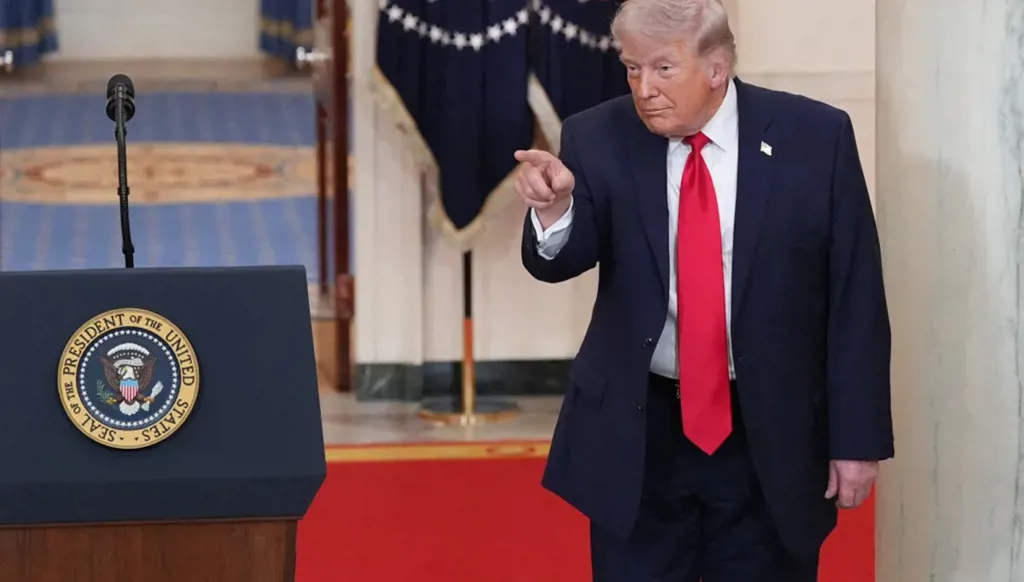


The US president did not present anything new or surprising in his speech yesterday, which he devoted to discussing the war against Iran. He repeated his statements about victory and achieving the desired objectives, saying that the United States would continue its operations against Iran for only a few weeks, while hinting that these would include the oil and energy sectors. He also stressed that the US military had undermined Iran’s ability to threaten the United States or the region. Despite all this, Trump did not close the door to a negotiated solution, noting that the door remains open.
Several options
Now, regardless of what Trump has said or continues to say, we are dealing with a figure who lacks clarity, makes contradictory statements, and tends toward showmanship, boasting, and personalization. It is therefore more useful, in understanding the direction of his policy, to observe the movement of US forces on the ground. These indicate that the United States is moving toward escalation and will continue to carry out strikes aimed at weakening Iran’s military and economic capabilities, as well as its infrastructure, more intensely than before, with active Israeli participation.
There are several possible options or scenarios that could bring this war to an end, according to the direction of the US administration. The first is the continuation of the war and the delivery of heavy strikes, potentially leading to the fall of the regime in Iran, an outcome encouraged by Israel.
The second is reaching a certain threshold through military strikes and internal pressure that would force the Iranian regime to submit to well known US conditions, including abandoning its nuclear capabilities, giving up ballistic missiles, and ending its relationship with militias that act as its regional proxies.
The third is carrying out limited military action on the ground on Iranian islands in the Gulf, including Kharg Island, and possibly along the Gulf coastline, in order to create a powerful shock that could destabilize the regime and place it under long term threat.
The fourth is reviving the Iraqi option, as the United States did in the Gulf War of 1991, when it expelled Iraqi forces from Kuwait and imposed sanctions, isolation, and a blockade that gradually weakened and drained the regime until it was eventually overthrown during the US invasion of Iraq in 2003.
At present, it is clear that the US Israeli war against Iran has succeeded in weakening the Iranian regime on multiple levels, whether through the assassination of top and second tier leaders, the depletion and paralysis of military capabilities, or the scale of destruction inflicted on infrastructure and urban areas.
Many problems
On the other hand, the Iranian regime faces numerous problems in this war. The most important is that, despite its clear and strong preparation for such a conflict on all levels, its military, economic, and technological resources remain limited.
Second, it is completely exposed, as no country in the world is offering it any real support, including the BRICS countries that it had long relied on to counterbalance the United States, such as China, Russia, and India.
Third, because of its coercive and pressure driven policies toward neighboring countries, especially in the Gulf, it has become regionally isolated. This situation has been made worse by its targeting of those countries, as only one fifth of Iranian drones and missiles were directed at Israel, while four fifths targeted Gulf states.
Fourth, over the past two years, the Iranian regime has lost many of its key footholds. It has largely lost Iraq, as well as Syria and Lebanon, along with most of its militia proxies in the Arab Levant.
Another problem lies in the regime’s flawed perceptions. It built its entire strategy on military confrontations and militias, which have ultimately collapsed despite the billions spent on them. In return, it has gained little but hostility from countries in the region and has found itself drawn into a war or military confrontations with the United States and Israel, something it had carefully avoided for the past two decades, even during the brutal Israeli war in Gaza and during Israel’s targeting of Hezbollah in Lebanon since September 2024.
In other words, these assumptions were based on the belief that the United States was in decline, that Israel was weaker than a spider’s web, and that the BRICS countries would form a rising global bloc capable of displacing the United States. These same assumptions led its leaders to claim that their country controlled several Arab capitals such as Baghdad, Beirut, Damascus, and Sanaa. In reality, these claims have proven reckless and detached from facts, causing harm to the Iranian people, to the regime itself, and to countries in the Gulf and the Arab Levant.
As a result, instead of strengthening its regional position and safeguarding its country by placing its people on a path of political, social, scientific, technological, and economic development, the Iranian regime has squandered its resources in areas where it cannot effectively project power, except against its immediate neighbors rather than against Israel or the United States. Unfortunately, this is the current reality, and the greatest losers are the Iranian people and the Arab peoples.
Disclaimer: The opinions expressed by the writers are their own and do not necessarily represent the views of Annahar