

U.S. warns Iran: Strait of Hormuz will remain open and nuclear ambitions are unacceptable



 Messenger
 Whatsapp
 Threads
 Email
Email
 Print
Print
 X
X
 Facebook
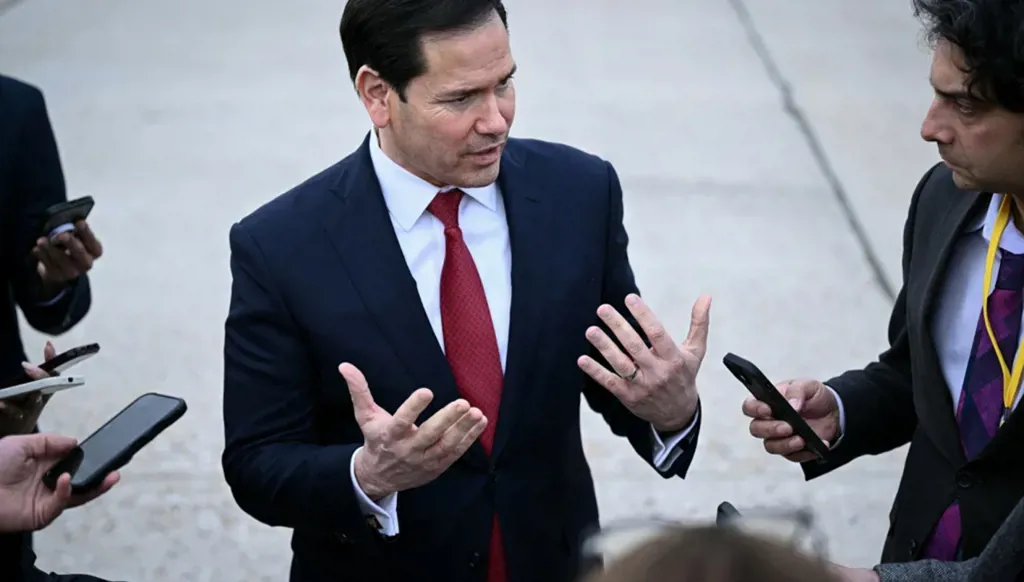


U.S. Secretary of State Marco Rubio confirmed on Monday in remarks to Al Jazeera that the Strait of Hormuz will be opened "one way or another" once the military operation in Iran concludes. He emphasized that the United States "refuses to accept Iran's sovereignty over this international waterway," describing it as "a dangerous precedent that would allow countries to seize control of international waterways." He also stated that "imposing transit fees is unacceptable to us and should not be accepted by the world."
Rubio explained that the strait will be opened either with Iran's consent or through an international coalition involving the United States. He warned that if Iran chooses to close the strait after the military operation, "it will have to face serious consequences." He also noted that Washington is aware of the strait’s impact on global markets and neighboring countries, particularly America’s allies.
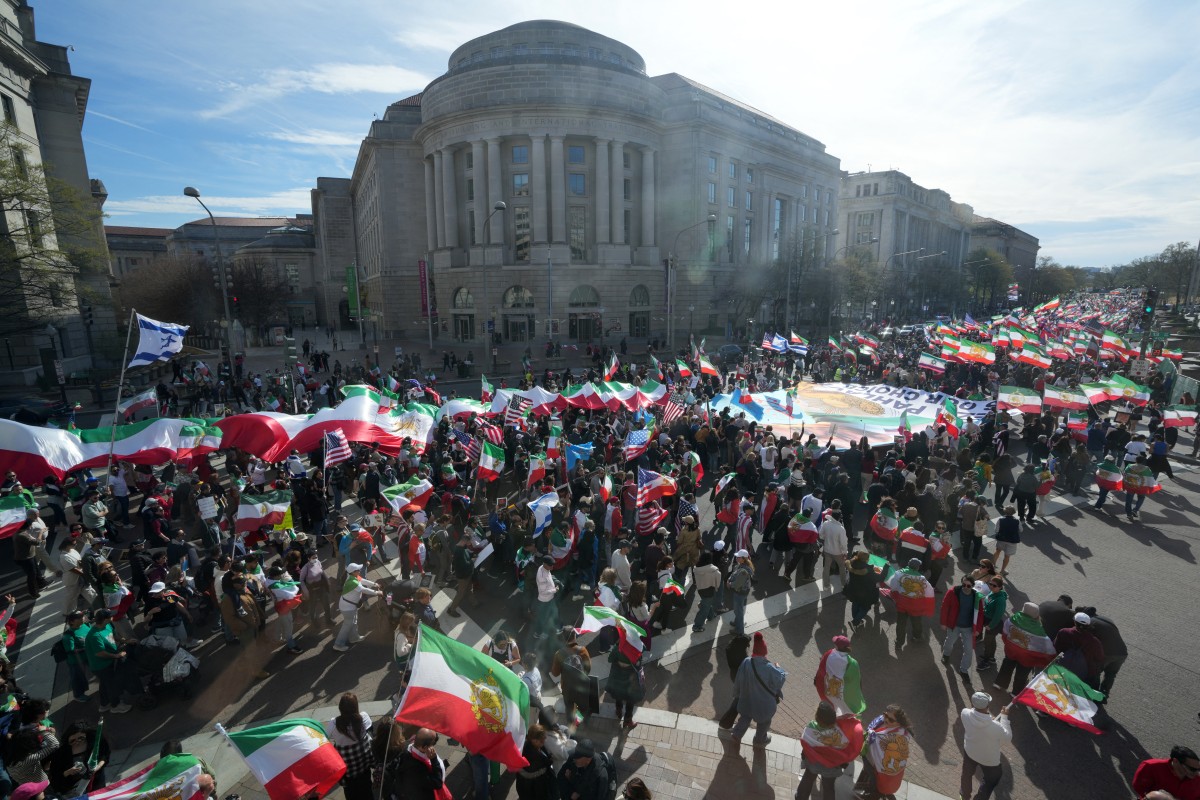
Nuclear Program and Weapons Ambitions
Rubio emphasized that "our objectives in Iran are clear, and we will achieve them within weeks, not months," stressing that the Iranian regime wants to acquire a nuclear weapon "to threaten and blackmail the world." He added, "We will not allow that to happen, as the consequences would be severe."
He reaffirmed U.S. demands from Iran, stating: "Iran must now take concrete steps toward abandoning any ambition to possess nuclear weapons," in addition to stopping the production of drones and missiles recently observed. He added that if Iran abandons its weapons programs and nuclear ambitions entirely, "its future could be bright."
Missiles Targeting Gulf States and Support for Militias
Regarding Iran's missile capabilities, Rubio said that the short-range missiles launched by Iran "are aimed at attacking Saudi Arabia, the UAE, Qatar, Kuwait, and Bahrain." He pointed out that the Iranian regime has spent the country’s wealth to support Hezbollah, Hamas, and militias in Iraq, unnecessarily threatening its neighbors.
Rubio noted that while Iranian drones and missiles "may occasionally penetrate defenses, the vast majority are intercepted," stressing that "the countries of the region are strong; they are our allies and friends, and we will continue to stand by them and support them against these attacks."
He emphasized that "the Iranian regime cannot be allowed to acquire nuclear weapons and must stop sponsoring terrorism and threatening its neighbors," adding that "Iran has attacked embassies and diplomatic facilities in unprecedented ways, as well as airports in unusual actions." He also considered that the involvement of the Houthis "could be a problem, and it is a problem that already exists."
Future Vision and Diplomacy
On the diplomatic front, Rubio expressed U.S. support for "a scenario in which Iran is led by people with a different vision for the future," noting that "if the opportunity arises, we will seize it," and that "Iran is currently at its weakest point in ten years."
He added that U.S. President Donald Trump "prefers diplomacy and achieving results, and we could have done so previously," pointing to messages and direct talks between parties in Iran and the United States through intermediaries.