

Beirut’s deadline ignored: Iranian ambassador remains in Lebanon
Tehran’s insistence on keeping him in Beirut heightens political tensions and tests Lebanon’s sovereignty.



 Messenger
 Whatsapp
 Threads
 Email
Email
 Print
Print
 X
X
 Facebook
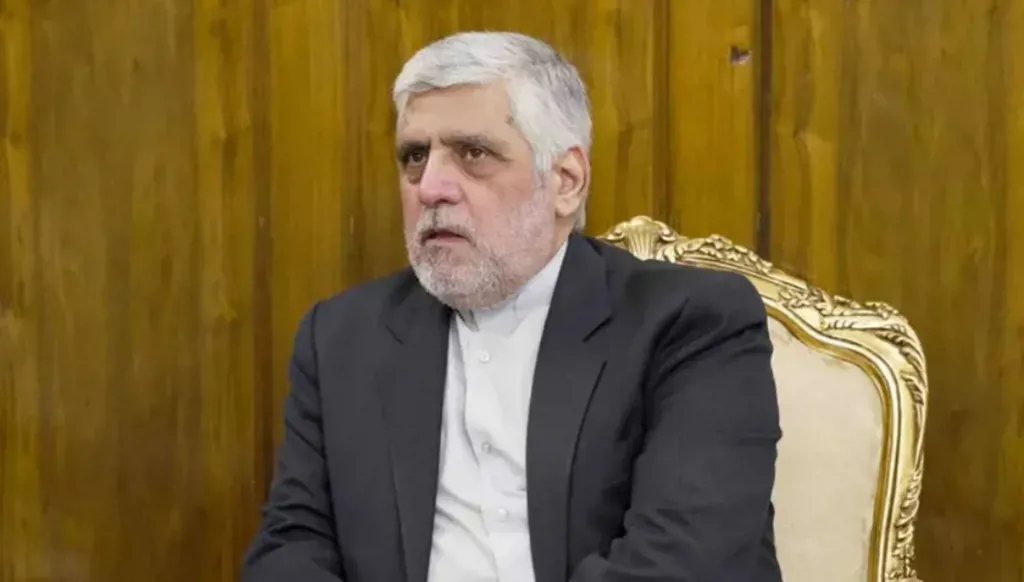


The first comment after the deadline given to the Iranian ambassador to leave Lebanon on Sunday night into Monday came from Israeli Foreign Minister Gideon Sa’ar: the Iranian ambassador is still enjoying his coffee in Beirut despite the Lebanese Foreign Ministry declaring him persona non grata.
Soon after, the Iranian Foreign Ministry announced through spokesperson Esmail Baghaei that the Iranian ambassador to Lebanon would continue his work in Beirut. During his weekly press conference, he said, "Our ambassador will continue his work as Iran’s ambassador in Beirut and will remain there," adding that the embassy in Beirut "is still operating."
While Lebanon does not need an Israeli comment to escalate internal tension and incitement, nor does it require an overt Iranian declaration of disregard for the law and defiance of state logic, the question remains whether Tehran intends to deal with Lebanon as a sovereign state or whether it wants Lebanon to remain a field for its battles and a foothold for its Revolutionary Guard, disregarding its sovereignty on its own territory while simultaneously claiming to help it achieve that sovereignty, knowing that sovereignty cannot be divided regardless of who violates it.
Today, the Iranian ambassador appointed in Beirut is residing illegally and has no immunity. It is true that the Lebanese Internal Security Forces will not act on their own to arrest him, and they cannot intervene on embassy grounds, which enjoy immunity like other embassies. However, it is certain that if the ambassador eventually leaves, he could be detained at the airport or, in the extreme case, after regularizing his departure like any foreigner, he could be prevented from returning to the country.
In international law, the equation is very clear. Dr. Imad Salameh, head of the Political and International Studies Department at the Lebanese American University, explains to Annahar that "if the Iranian ambassador does not comply with the decision to leave Lebanon within the specified period, his legal status will change fundamentally. The Lebanese Foreign Ministry will withdraw or effectively cancel diplomatic recognition, which practically means nullifying his diplomatic visa and rendering his residency illegal, thus subjecting him to Lebanese law."
The administrative procedure is not the main issue, as there are always solutions, but the crisis is political and concerns the relationship between the two countries. It has been ongoing for some time, as the Lebanese government previously banned Iranian flights from landing at Beirut Airport, a decision supported by the Shiite duo to avoid a military strike on Lebanon’s vital air facility. The Lebanese government also implemented inspections for arriving Iranian officials, required advance entry visas, and deported a significant number of Iranian nationals in Lebanon last week, around a hundred or more who were taken away by an Iranian plane, culminating in the decision regarding the newly accredited ambassador.
These gradual decisions reflect the poor relationship between the two countries and perhaps the external pressures Lebanon faces in this regard. Lebanon may have been bolder than several Arab countries that have faced daily Iranian aggression. Instead of Tehran seeking to resolve its relationship with Lebanon, it deepens the crisis with Lebanon and other Arab countries, widening the gap while betting on negotiations with what it calls "America, the greater devil," to achieve gains at the expense of Arab countries and their peoples once again. It ignores all hostile stances from the American administration and redirects its hostility toward the closest nations, targeting every successful model in the region, especially Lebanon, the United Arab Emirates, Kuwait, and others.
Disclaimer: The opinions expressed by the writers are their own and do not necessarily represent the views of Annahar