Beirut morgues under strain as DNA testing becomes last hope for families after “Black Wednesday”
Amid rubble recovery and rising casualty figures, relatives of the missing wait outside Rafic Hariri Hospital as forensic teams race to identify fragmented remains.
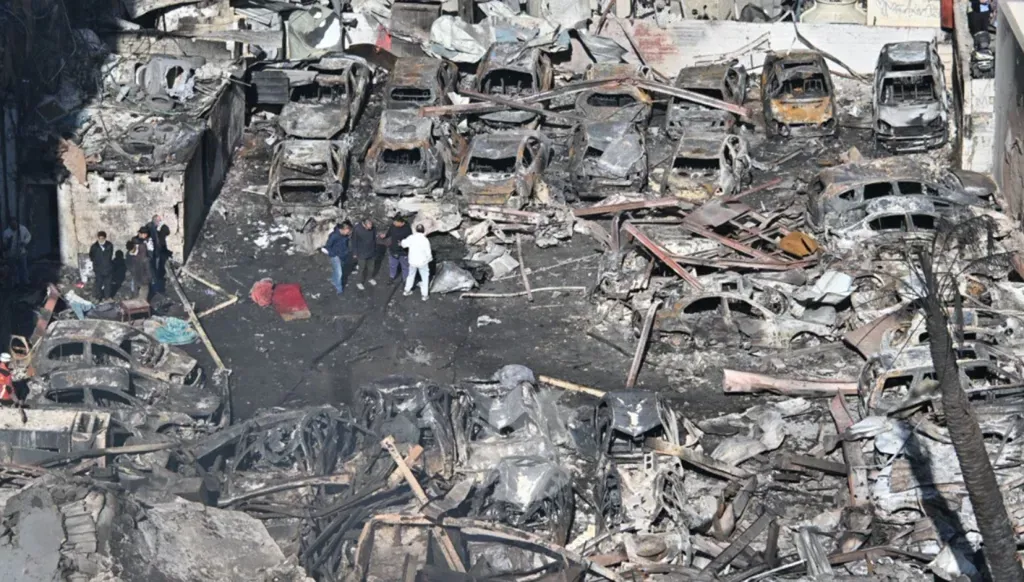
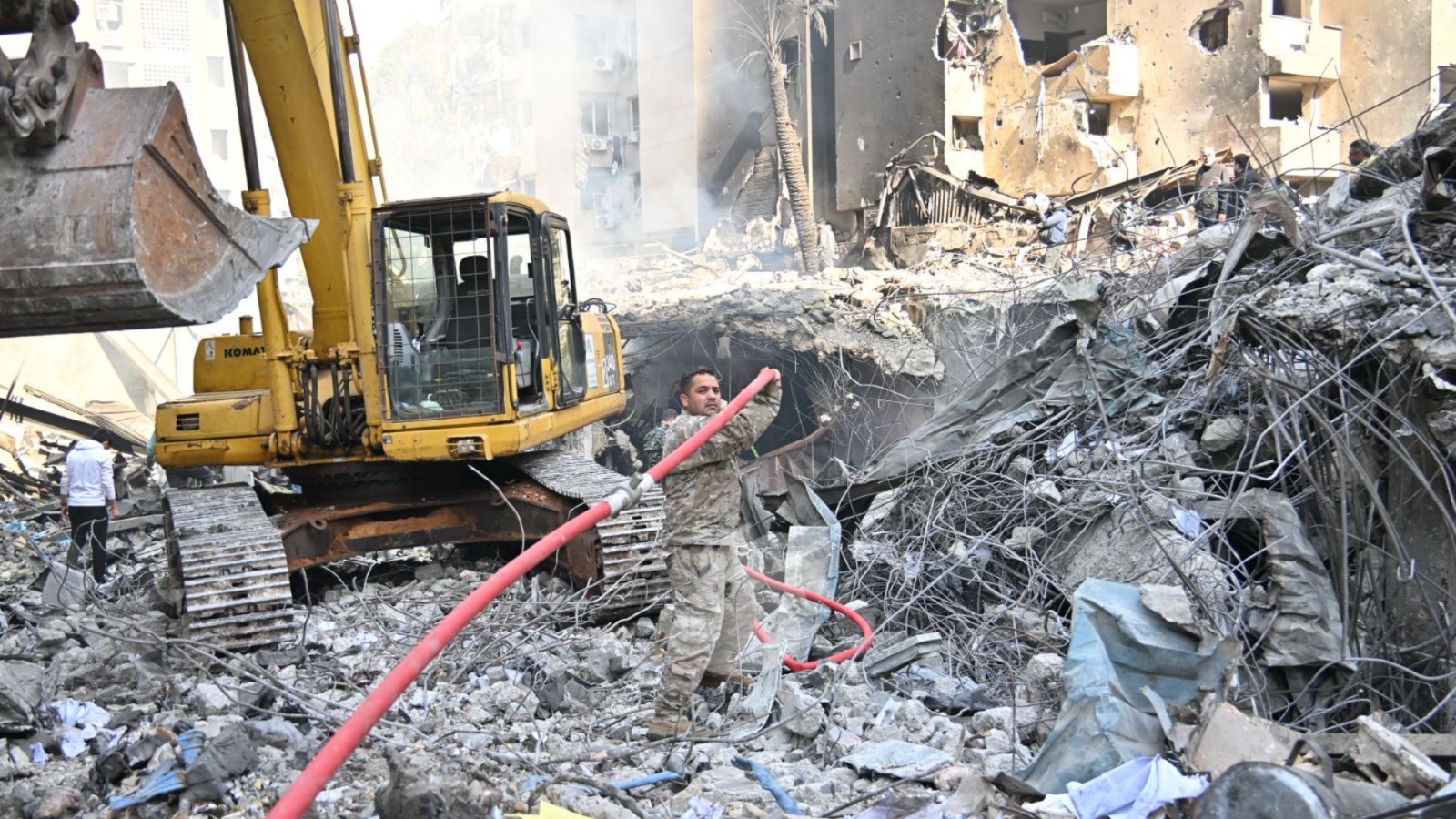
Damages on Corniche Al-Mazraa in Beirut (photo by Houssam Shbaro – Annahar).
A young Syrian man in his thirties carries a blue gallon, gripping it tightly, and asks for the location of the morgues at Rafic Hariri University Hospital. He walks with steady steps, as if carrying more than just a plastic container. When asked, he replies in a low voice, “It contains blood from my relatives in Syria… to match with two bodies in the morgue.”
He continues speaking as he searches for the place, before arriving and handing over the “trust,” as he calls it. He says he traveled a long distance for this moment. After Nabatieh was targeted, where his relatives worked, it became impossible to identify the bodies, prompting him to travel to Syria to collect family samples and return them to Lebanon for DNA testing.
Prohibition and secrecy
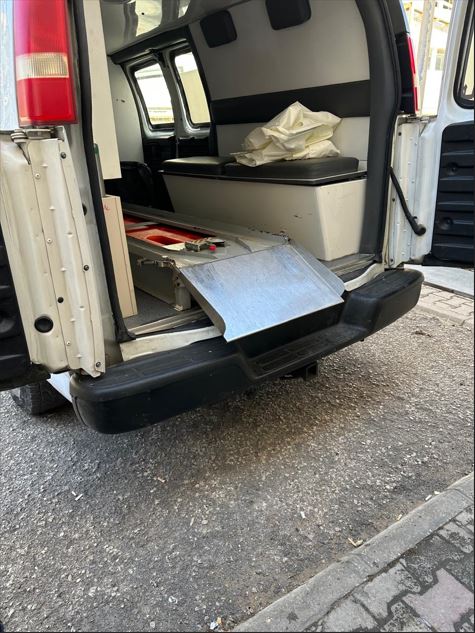
Outside, while we wait, an ambulance belonging to the Islamic Health Society arrives to transport two bodies. The first is Zahra, in her forties, and the second is her daughter Hanan (23), who was preparing for her wedding in a few weeks before she was killed, along with her mother and relatives, in the Israeli raids that targeted Hay Al-Sellom on the “Black Wednesday” of April 8.
One of the victims’ relatives, standing in front of the hospital morgues, says, “My brother’s wife and daughter died, as well as my uncle's wife, daughter, and her three children. They were all on the first floor of the building in Hay Al-Sellom, which collapsed completely on its residents.”
He recounts the harrowing moment: “The missile fell… and the mother and daughter were thrown together. Only yesterday did civil defense teams manage to retrieve their bodies. The mother was found at four in the afternoon, and the daughter at six in the evening. The removal of rubble and the recovery of other victims are still ongoing.”
Ambulance transporting two bodies from Rafic Hariri University Hospital morgue.
While we were at the hospital following up on the DNA sample collection, we were prohibited from conducting any interviews or filming, in compliance with an administrative decision banning internal media coverage. The hospital administration refused to provide us with any figures or details about the sample collection and referred us to the Ministry of Health for further information.
On the other hand, the Ministry of Health handles this case with extreme secrecy and does not disclose the number of unidentified bodies. The issue is complicated, involving the jurisdiction of several entities, including the Ministry of Interior and forensic authorities, as part of the process of collecting samples from families of missing persons and matching them with unidentified bodies.
The number of people registered on the missing persons lists in Beirut up to this hour is 36, distributed as follows, according to the Disaster and Crisis Management Room in the Beirut Governorate: 9 people are still missing, 17 have been confirmed dead by hospitals or their families, including two children under the age of eighteen, while 10 have been found alive and reunited with their families, including a child.
Sample collection from corpses and remains
The collection of samples from unidentified bodies and remains in the morgues at Rafic Hariri University Hospital began the day before yesterday, in preparation for DNA testing to identify the victims.
On the same day, civil defense teams continued removing debris and searching for missing persons under the rubble since the so-called “Black Wednesday.” However, the scene was even more brutal, with large numbers of victims and bodies being pulled from under the rubble, while surviving relatives waited anxiously, searching for their loved ones, even if only their remains.
In an attempt to read the figures issued by the Lebanese Ministry of Public Health and compare them with field observations, it appears that the number of bodies recovered yesterday was remarkably high.
This is confirmed by the head of civil defense, Brigadier General Imad Khreich, who states, "We retrieved a large number of bodies two days ago, some were deformed due to explosive materials in the Israeli raids, while others were scattered remains, and some whole bodies were also found."
In contrast, the Ministry of Health released a new update on the number of victims, showing an increase in the number of martyrs from 203 to 357, an increase of 154 victims in one day, who were transferred to hospital morgues awaiting identification.
This rising toll reveals a harsher reality: bodies are still trapped under the rubble. More challenging is that, as indicated in the ministry’s statement, the toll is “not final,” as debris removal continues and there are large quantities of remains, requiring time for DNA testing and confirming victims’ identities before announcing the final toll.
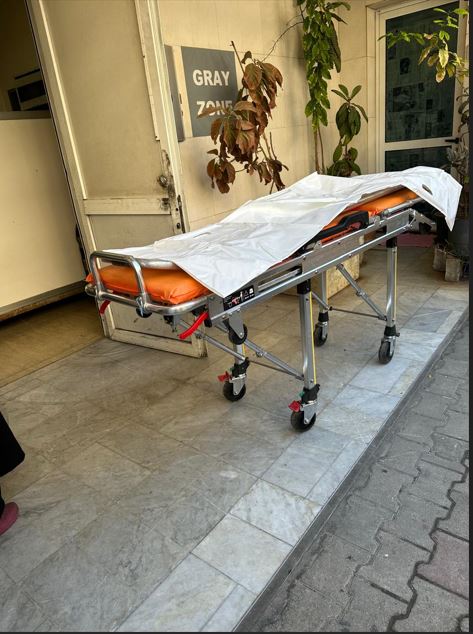
Awaiting body transfer from Rafic Hariri University Hospital morgue.
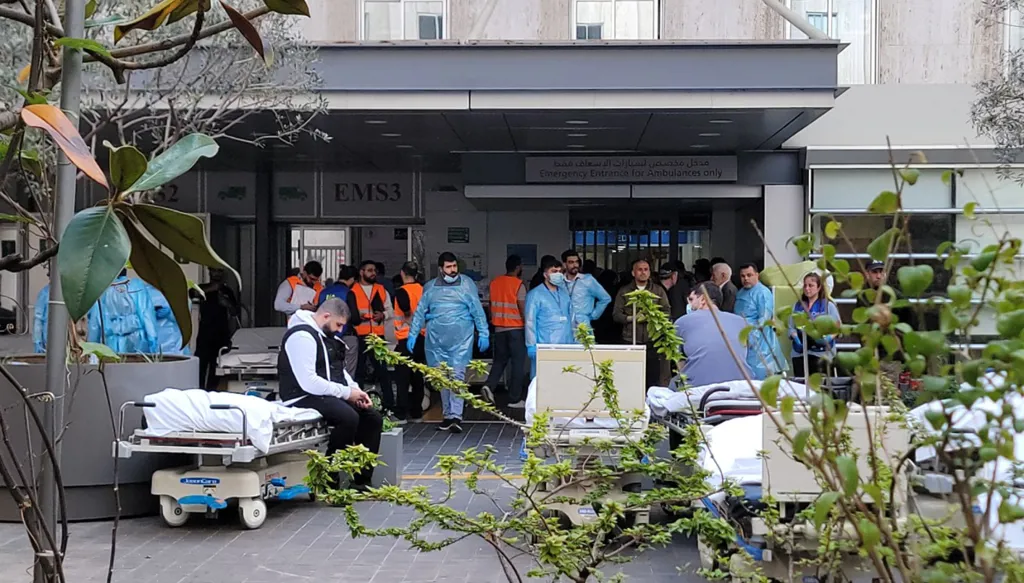
At the entrance to Rafic Hariri University Hospital, relatives of missing persons continue their exhausting search, moving between morgues in the hope of identifying their loved ones.
The hospital is receiving the largest number of victims from the Israeli raids on Wednesday, forcing its administration to expand the morgues to accommodate the bodies that are continuously being pulled from the rubble.
The hospital director, Dr. Mohamed Zaatari, tells Annahar: “We began collecting samples from the bodies two days ago, and we need between 24 and 48 hours to finish taking samples from all bodies and remains in the hospital.”
Due to the severity of the raids, medical teams faced extremely harsh cases, mostly severe head injuries and heavy bleeding. Zaatari indicates that "there are whole bodies, others mutilated, and some were just remains."
Some families managed to identify their victims without needing DNA tests, while mutilated bodies and remains are awaiting results before being matched with samples from the families of missing persons and then handed over to their relatives.
Hospital in Beirut receiving Wednesday's Israeli massacre victims (AFP).
Call to missing persons' relatives
In this context, families of missing persons are supposed to go to forensic centers to provide samples. The Lebanese Ministry of Public Health and the Directorate of Guidance in the Internal Security Forces issued statements calling on the families of the missing to provide DNA samples daily from eight in the morning until three in the afternoon.
Families were advised to go to forensic accident offices affiliated with the judicial police unit in various governorates to conduct the necessary tests, and to bring one form of identification (passport, family card, or ID). It is preferable for two direct family members (father, mother, or children) to be present, or, if not possible, siblings, to ensure accuracy and expedite the identification of victims.
The Ministry of Health asked families to go to the emergency health review office established by the ministry at Hariri Hospital in Bir Hassan, near the hospital’s warehouses, daily between ten in the morning and five in the afternoon, starting Saturday, to provide all consultations on this matter for necessary follow-up and to determine the fate of the missing.
From the site of Israeli raids in Beirut's southern suburb (Nabil Ismail - Annahar)
Large number of bodies and harsh scenes
The head of Civil Defense, Brigadier General Imad Khreich, confirms that a large number of bodies were recovered two days ago, and operations are still ongoing. He says, “We continue to retrieve bodies; the situation is difficult, and the scenes are harsh. I cannot specify the exact number, but I can say the toll was high.”
One phrase is repeated by the concerned parties: “We cannot disclose the number of bodies and missing persons.” However, the reality on the ground, whether on-site or inside hospitals, reveals the extent of the tragedy.
Emergency doctor at Rafic Hariri University Hospital, Dr. Fatahallah Fattouh, explains that sample collection focuses on deformed bodies and remains, to determine their identities and hand them over to their families after DNA test results are available.
The hospital’s laboratory is operating at full capacity to conduct these tests under unprecedented pressure. Feteh recalls similar experiences the hospital has faced before, such as the Ethiopian plane crash or the port explosion, where unidentified bodies were found. However, he notes that “what we are witnessing today is the hardest, due to the large number of unidentified bodies resulting from the sudden targeting of densely populated residential buildings without warning.”
He adds: “The bursts of explosions, the injuries caused by shrapnel, and the proximity all lead to body fragmentation.” He does not hide that what “we are dealing with today is a type of warfare we have not encountered before, using advanced and highly lethal weapons, requiring us to handle injuries differently.”
But how is DNA tested?
Dr. Afif Khafaja, a forensic medicine specialist, explains the mechanism of identifying bodies and remains, stating that “usually a sample is taken from the body or remains—whether from muscles, teeth, or bones—and compared with samples taken from family members, such as hair or blood (father, brother, or son), to conduct DNA testing and confirm kinship, with results available in about five days.”






 Messenger
 Whatsapp
 Threads
 Email
Email
 Print
Print
 X
X
 Facebook