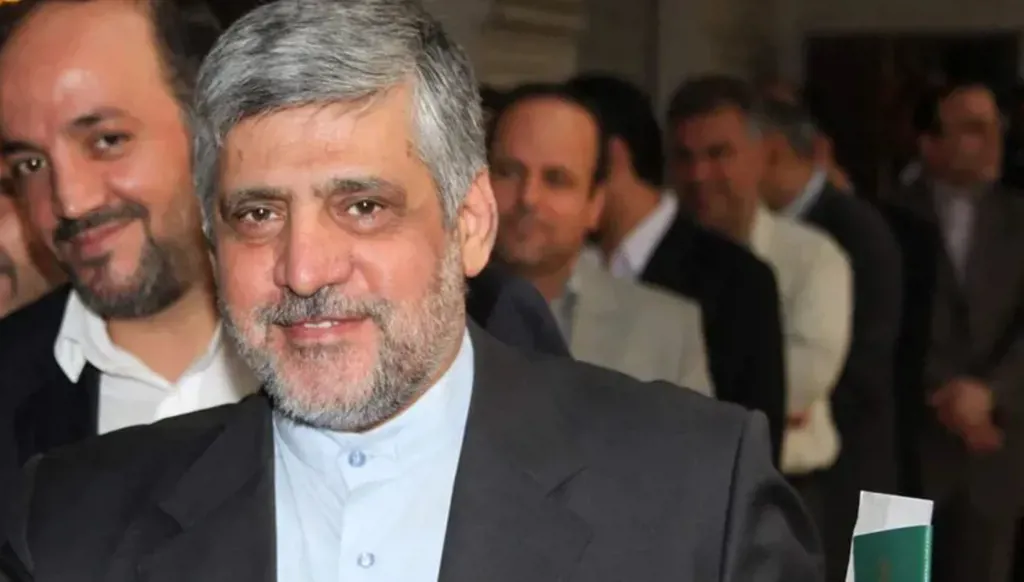
The Iranian ambassador to Lebanon, Mohammad Reza Shibani, has become a symbol of governmental paralysis in the Cedars’ country. Considered 'persona non grata' by the Lebanese Ministry of Foreign Affairs, he has emerged as a pivotal figure according to the “Shiite duo.” Lebanese Foreign Minister Youssef Raggi, who made the decision regarding him, was praised as a role model by many Lebanese, while the duo viewed his actions as unforgivable. Hezbollah official Mahmoud Qomati went so far as to threaten him, saying he would “burn him, those with him, and those behind him.”
In an instant, Lebanon’s top authorities vanished from the radar: there was utter silence in the face of the fierce campaign and denial leaks, coupled with a quasi-approval of the “Iranian rebellion,” after Tehran, supported by the “duo,” decided to reject recalling their “unwanted” ambassador.
From discontent to expulsion
What transpired before reaching this point?
When Iran sent the credentials of Ambassador Mohammad Reza Shibani, routine internal investigations by the Lebanese Ministry of Foreign Affairs revealed that he was, in fact, a high-ranking officer in the Iranian Revolutionary Guard, who had played key roles in Syria during the era of repression against opposition factions. According to well-informed sources, this assessment delayed the acceptance of his credentials. Eventually, however, the Foreign Ministry left the decision to the President, who received his file without setting a date to approve the papers.
Matters escalated when Hezbollah entered the war in March “in retaliation for the assassination of Supreme Leader Ali Khamenei” and in support of Iran, dragging Lebanon into existential threats and into a war it had been striving, with all its means, to avoid.
Authorities revolted against turning Lebanon into an “Iranian card,” while Iranian statements tying Hezbollah to Iran widened the gap with official Lebanon, which could no longer ignore the conversion of the Quds Force in Lebanon into a massive arms depot for its interests and under its command!
With the beginning of Israeli targeting of leaders of the Quds Force in Lebanon, the Foreign Ministry was taken aback by the Iranian ambassador’s claim that those targeted were diplomats. This did not appear in Foreign Ministry records, as earlier a diplomatic scandal had been buried: Iran had sent over fifty Quds Force activists to Lebanon under diplomatic cover!
At that point, the Foreign Minister decided to issue an official protest to the Iranian authorities and summoned Abdul Sattar Issa, the Secretary-General of the Foreign Ministry, to call in Iranian Chargé d’Affaires Tawfiq Samadi Khushkhu. On March 13, he handed him a message containing the protest along with a series of questions about Iran’s military and financial activities in Lebanon, requesting responses within 24 hours in accordance with applicable procedures.
However, instead of submitting the answers to the Foreign Ministry, Ambassador Shibani appeared on Hezbollah‑aligned media on March 18, launching an attack on the Lebanese Ministry of Foreign Affairs for allegedly following a “hostile agenda.” He criticized government decisions that criminalized the party’s military activities, deemed them wrong, and called for their retraction!
At this juncture, Foreign Minister Youssef Raggi decided to escalate. He considered expelling the Iranian ambassador as an initial measure and consecutively contacted the President and the Prime Minister to inform them of his proposal, finding both very enthusiastic and supportive of the decision!
Amid this enthusiasm, he instructed the Foreign Ministry departments to officially prepare the dossier and summon the Iranian Chargé d’Affaires to convey the decision to withdraw Ambassador Shibani’s credentials and declare him persona non grata.
On March 24, Issa informed Khushkhu of the decision, setting an implementation deadline for the 29th of the same month.
Simultaneously, the Lebanese ambassador to Iran, Ahmad Soueidan, was called back to the central administration for consultations.
This decision angered Iran, and the “Shiite duo” mobilized against it, providing cover for Shibani’s refusal to comply with the Foreign Ministry’s decision and deepening the diplomatic standoff.
Ultimately, the expulsion decision was not carried out, but effectively, Iran no longer has an ambassador in Lebanon, as Shibani remains on Lebanese territory without official connections on one side and without legal papers on the other. Furthermore, the Foreign Ministry will not send a Lebanese ambassador to Iran, effectively lowering the level of diplomatic representation between the two countries de facto.
Regardless of the immediate outcomes, what transpired demands close attention because of its negative repercussions on the reputation of a government trying to convince the outside world that it genuinely exercises sovereign decision-making in Lebanon!
Disclaimer: The opinions expressed by the writers are their own and do not necessarily represent the views of Annahar.





 Messenger
 Whatsapp
 Threads
 Email
Email
 Print
Print
 X
X
 Facebook