

Hariri: Future movement will represent the people in upcoming elections
Former Prime Minister Saad Hariri on the anniversary of his father’s assassination: The Future Movement will be your voice in national responsibilities, most importantly the parliamentary elections.



 Messenger
 Whatsapp
 Threads
 Email
Email
 Print
Print
 X
X
 Facebook
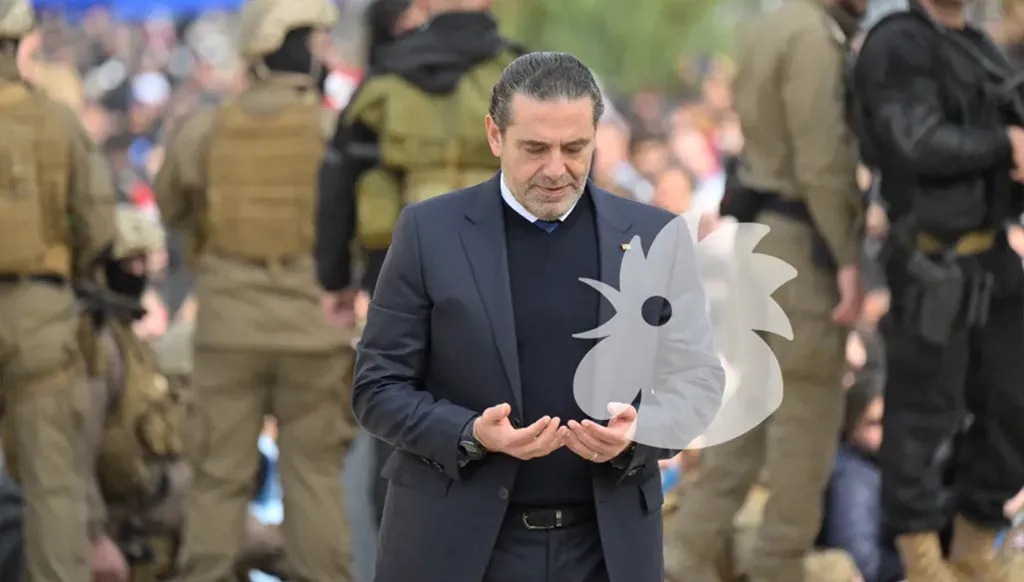


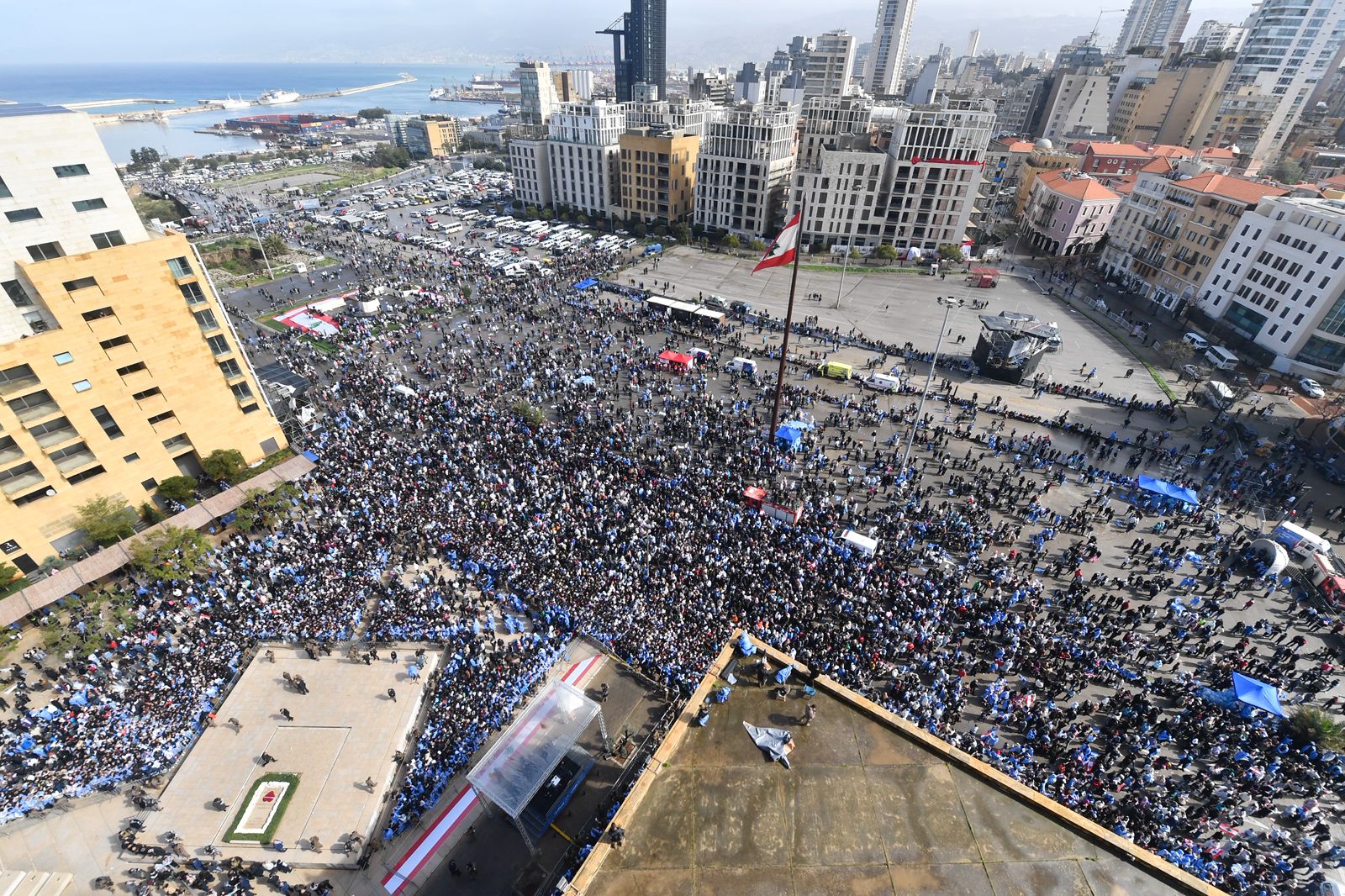
The Future Movement once again demonstrated its ability to mobilize its supporters, showing it still holds a strong popular base despite years of recent retreat. On the twenty-first anniversary of the assassination of martyred former Prime Minister Rafic Hariri, and before a large crowd in Martyrs’ Square, former Prime Minister Saad Hariri delivered direct political messages, emphasizing steadfastness in the “Hariri school” and keeping the national compass on course, stressing that this approach “may take a warrior’s rest, but it never disappears.”
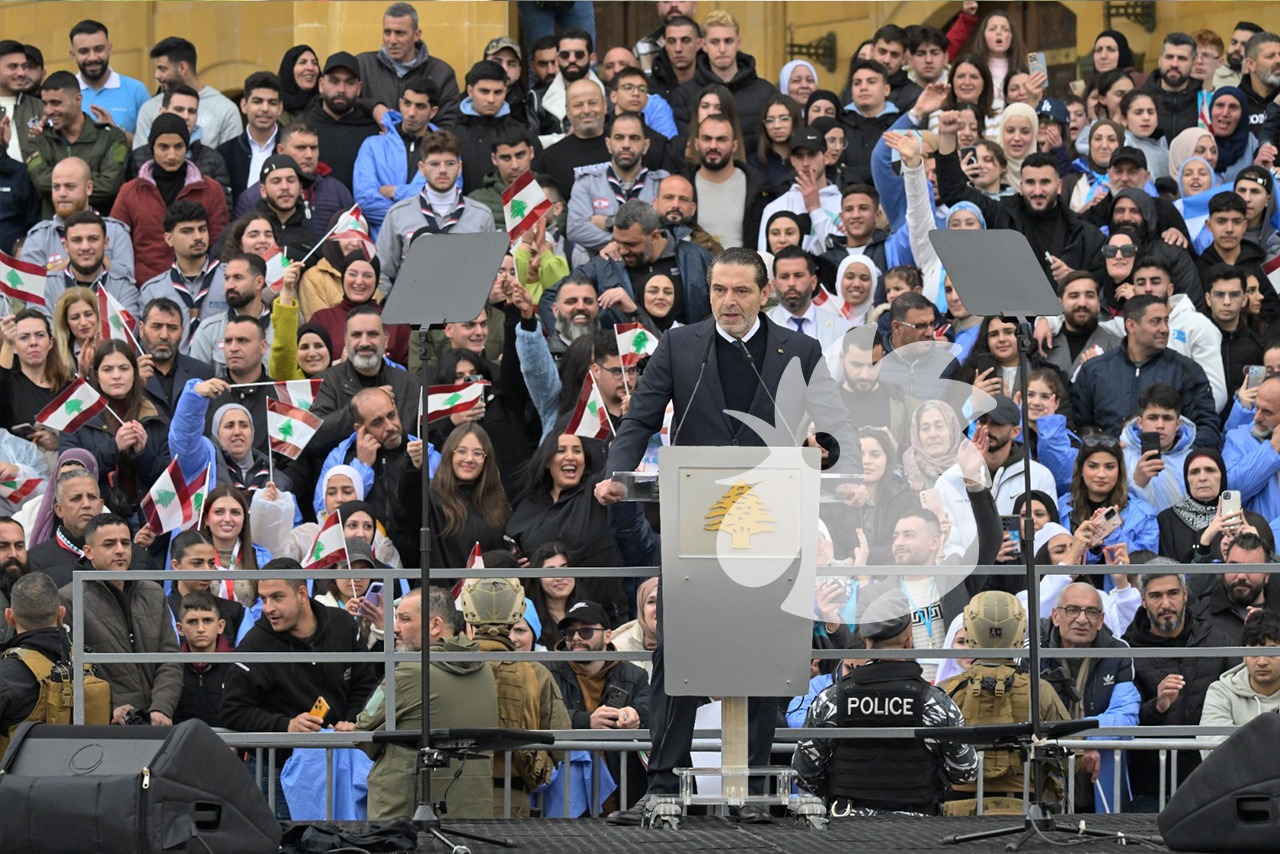
Hariri left the door open for the Future Movement to participate in the parliamentary elections, saying, “They will count our votes if the elections take place.”
While rejecting any political exploitation of Gulf disputes, he delivered direct statements in his speech, on multiple occasions, aimed at those plotting political schemes against the Movement across several issues.
He stressed that the large crowd presence proves that this path still has a future, that the grassroots are capable of shaping their own future, and that the Movement knows when to wait and when to take responsibility.
He pointed out that anyone who bet on breaking or eliminating this political line has “seen their bet fail,” considering the Hariri project to be a state-building vision based on the belief in a capable, united Lebanon, one whose past “does not shame its present.”
He recalled the legacy of his martyred father, Rafic Hariri, who contributed to ending the civil war and strengthening the logic of the state and its institutions. He also affirmed commitment to the option of a united Lebanon and rejected sectarian strife and division.
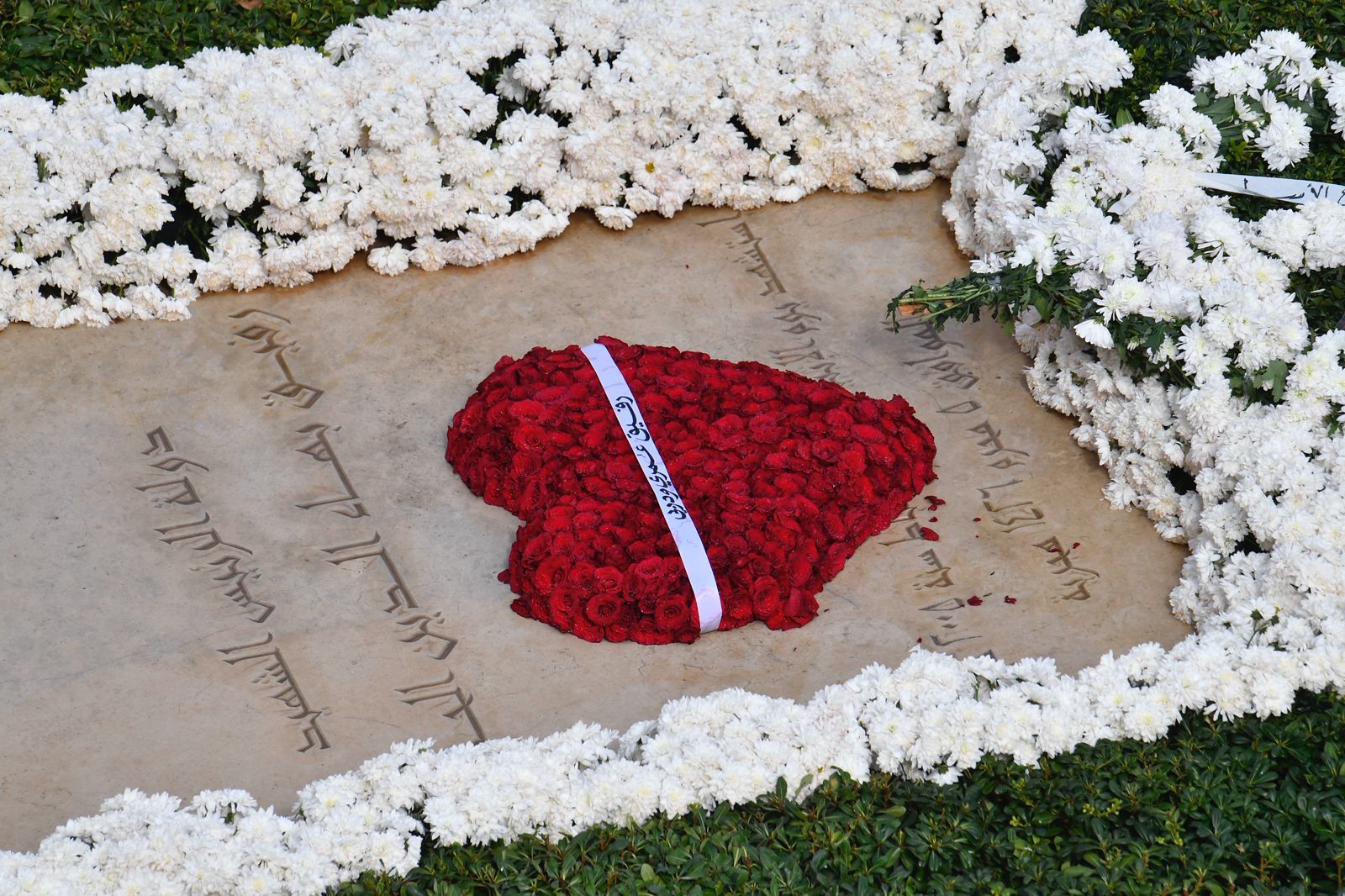
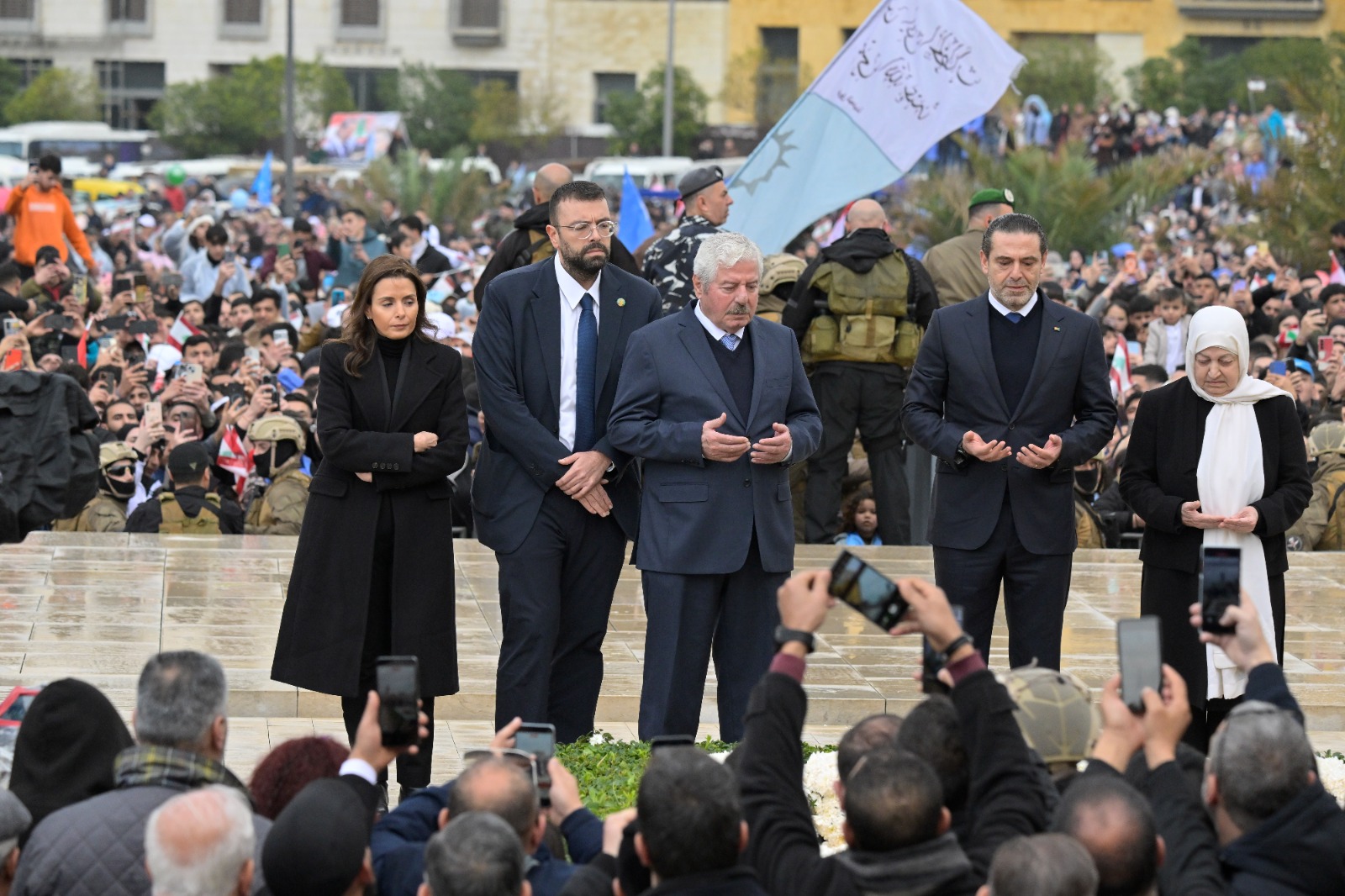
After reciting Al-Fatiha at the tomb of his father, the martyred former Prime Minister Rafic Hariri, and his companions—accompanied by his uncle Shafik Hariri, the Chair of the Hariri Foundation for Sustainable Human Development Bahia Hariri, the Secretary-General of the Future Movement Ahmad Hariri, and the CEO of Annahar Nayla Tueni—Hariri said: “Tell me when the elections will be held, and I will tell you what the Future Movement will do.” He added, “I promise you, whenever the elections take place, they will hear our voices and count them. You and I are together in good times and bad. We remain united in the school of the Future, and our time is near—much closer than their illusions.”
He affirmed that the Movement will be “the voice of its supporters when the time comes,” emphasizing: “Don’t get caught up in the basket of Gulf disputes… whenever the elections take place, they will hear our voices.”
He said: “Rest assured, tomorrow will be better, in the spirit of Gibran Tueni… and this is the last tunnel.”
He stressed that the Future Movement has never been outside the equation of moderation and the state’s path, affirming that “the Hariri project is a state-building path that continues by the will of its people.”
He added that the previous withdrawal from political activity was a rejection of politics conducted at the expense of the country, “because politics that come at the expense of the state have no place in our school.”
Hariri confirmed that “no weapons should be in anyone’s hands except the state’s,” and that his project envisions “a united, Arab, sovereign, and independent Lebanon,” renewing commitment to the full Taif Agreement, and stressing that “anyone who bet on eliminating the Hariri legacy miscalculated, because Rafic Hariri’s project endures.”
Turning to domestic issues, he noted that “the people of the South deserve a state that protects them,” and offered a special salute to Tripoli, saying that what collapsed there “was not just buildings, but dignity and responsibilities.”
Hariri renewed his pledge that the Future Movement will remain “the voice of the people in national responsibilities.”
At the conclusion of the event, Hariri walked among the crowds to the sound of chants of support, exchanging greetings and flowers with them, affirming: “The heart grows bigger because of you… and we will continue the journey together.”