U.S. warns Lebanon: Reclaim your territory or face consequences

Opinion 13-03-2026 | 12:26

U.S. warns Lebanon: Reclaim your territory or face consequences

Mike Waltz urges Beirut to reclaim control over its territory amid U.S.-Israel-Iran power plays, while Washington pressures Lebanon and Hezbollah navigates war dynamics.

U.S. warns Lebanon: Reclaim your territory or face consequences
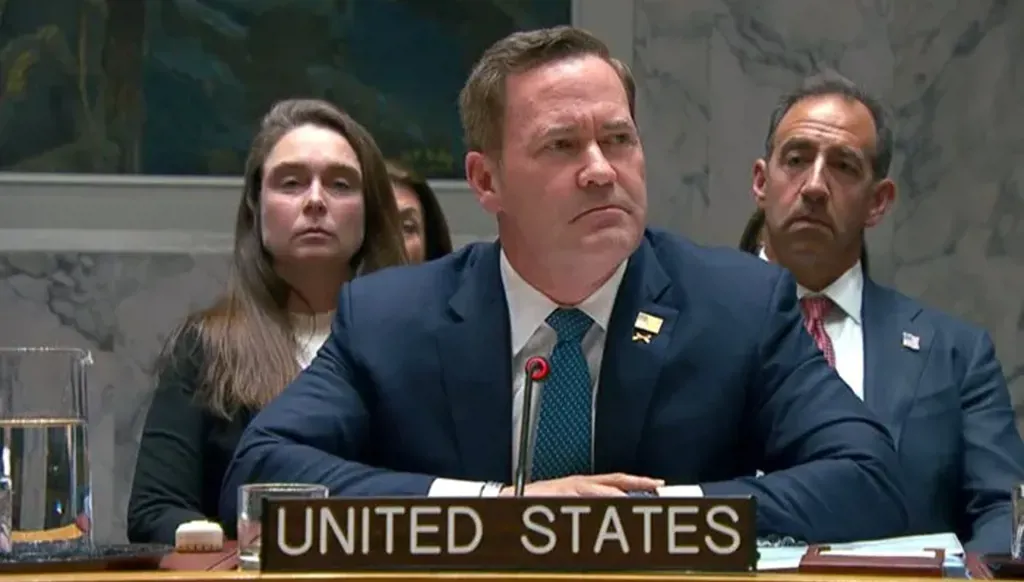
The American permanent representative to the United Nations, Mike Waltz.
Smaller Bigger


When the U.S. Permanent Representative to the United Nations, Mike Waltz, spoke for the first time about President Donald Trump's administration's stance on the threats facing Lebanon amid the war the United States is waging against Iran, he said: "Now is the time for the Lebanese government to regain control of its entire territory," urging "our friends in Lebanon not to miss this opportunity," and adding: "Our message is clear: take back your country, and we are fully prepared to allocate the time and resources necessary to achieve that." He praised the Lebanese government's measures to "expel the Iranian Revolutionary Guard."


The United States has taken a harsh stance toward Lebanon, blaming it for failing to disarm Hezbollah last year, with Washington issuing criticisms and reproaches in that context. At the same time, the U.S. has significantly distanced itself from supporting Lebanon by pressuring Israel to adhere to the ceasefire agreement that began implementation on November 27, 2024. Had it at least forced Israel to withdraw from the points it occupies, it would have provided the Lebanese state with considerable leverage, even if Hezbollah, in a new conflict, retaliated for the killing of Ali Khamenei whenever the "Revolutionary Guard" demanded it. The latter recently announced that it conducted a "joint operation" with Hezbollah against Israel, in a clear move to signal that ending the war in Lebanon is an Iranian bargaining card that Tehran is negotiating over, alongside the war it is waging against the United States and Israel.


There is a consensus that Lebanon represents a more significant card for Iran, particularly given its weakened state, which Iran can influence both from Lebanon and through it. Similar to its current strategy of trying to survive while exerting pressure on the United States in the energy sector—by closing the Strait of Hormuz and thereby raising oil prices in global markets following attacks on the Arabian Gulf and U.S. allies—Iran’s constraints regarding its involvement in Lebanon have significantly diminished. This is especially true if Iran has little left to lose, or if the choice for the party is between surrendering its weapons or surrendering altogether, as the outcome is effectively the same.


Even if the war on Iran has taken unexpected dimensions, even for the United States and Israel, Lebanon’s limits and capabilities can still be somewhat understood, despite the widespread belief abroad and at home that strong pressures are necessary—particularly regarding Lebanon’s authorities—and that leniency cannot be granted. So far, leaked information suggests that Israel, with international backing, can continue its military operations against Lebanon, while at the same time holding the Lebanese government responsible for disarming Hezbollah. This is a difficult expectation under the current intense wartime conditions and cannot reasonably serve as a precondition for Israel to halt its war.


There are many criticisms of the Lebanese state for its slowness, if not its reluctance, to disarm Hezbollah, but claims that it has been repeatedly warned that failing to do so would force Israel to act are inaccurate, especially since prior commitments predated the arrival of the new government. However, granting Israel free rein to expand its occupation of Lebanon or continue its aggressions may not be the best course, particularly if the United States considers the importance of Lebanon’s stability amid growing fears of a social upheaval with political and sectarian dimensions.


In reality, Washington must assist Lebanon in implementing the bold decisions its government has made, supporting it in launching a roadmap based on President Joseph Aoun’s initiative to dispel the illusions held by Hezbollah or Iran—that understandings similar to the April 1996 agreement could be revived, or that a ceasefire agreement where Hezbollah holds the decisive say as Israel’s opposing party is attainable. According to diplomatic opinion, this is not feasible, and repeating the past is no longer possible, yet both Iran and Hezbollah continue to build on this illusion or aspire to it even now. From this perspective, coordinated steps can be taken toward what the Lebanese state must do to disarm and firmly establish sovereignty over its entire territory, alongside corresponding Israeli measures that are necessarily linked to Lebanon’s commitment to these procedures under strict international monitoring.


Disclaimer: The opinions expressed by the writers are their own and do not necessarily represent the views of Annahar.