

The Middle East heads into 2026 trapped between fragile truces and looming escalation



 Messenger
 Whatsapp
 Threads
 Email
Email
 Print
Print
 X
X
 Facebook
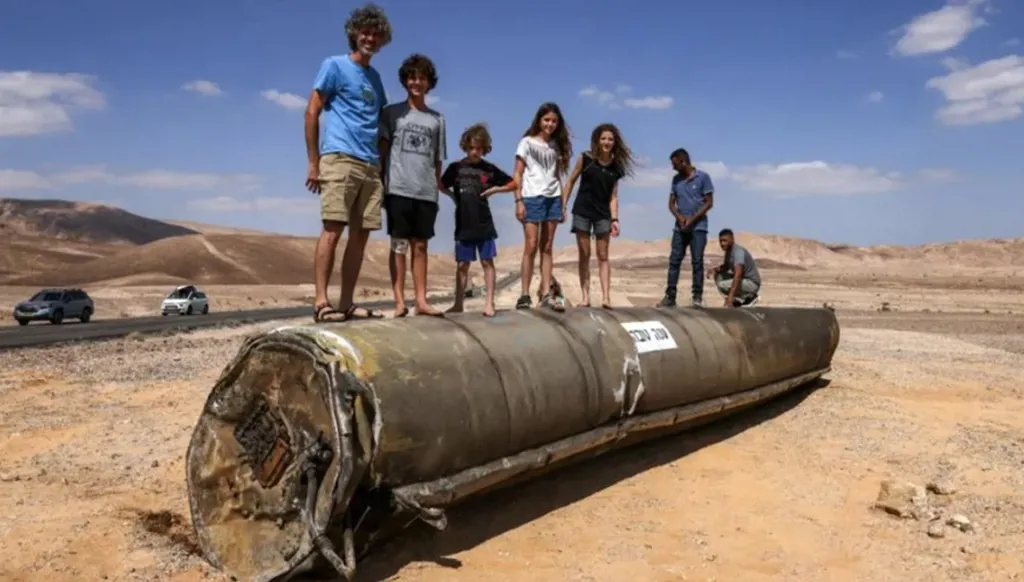


This is not a rhetorical statement but a description of how the region functions: crises managed incrementally, and truces that serve only as fragile bridges to the next crisis. As 2026 approaches, the Middle East appears trapped between two troubling paths - fragile containment and short-term de-escalation, or low-intensity escalation that could spiral into wider confrontation at the first moment of miscalculation.
Two dangerous approaches are at play. While some challenges appear local or marginal, they are in fact indicators of broader regional trends.
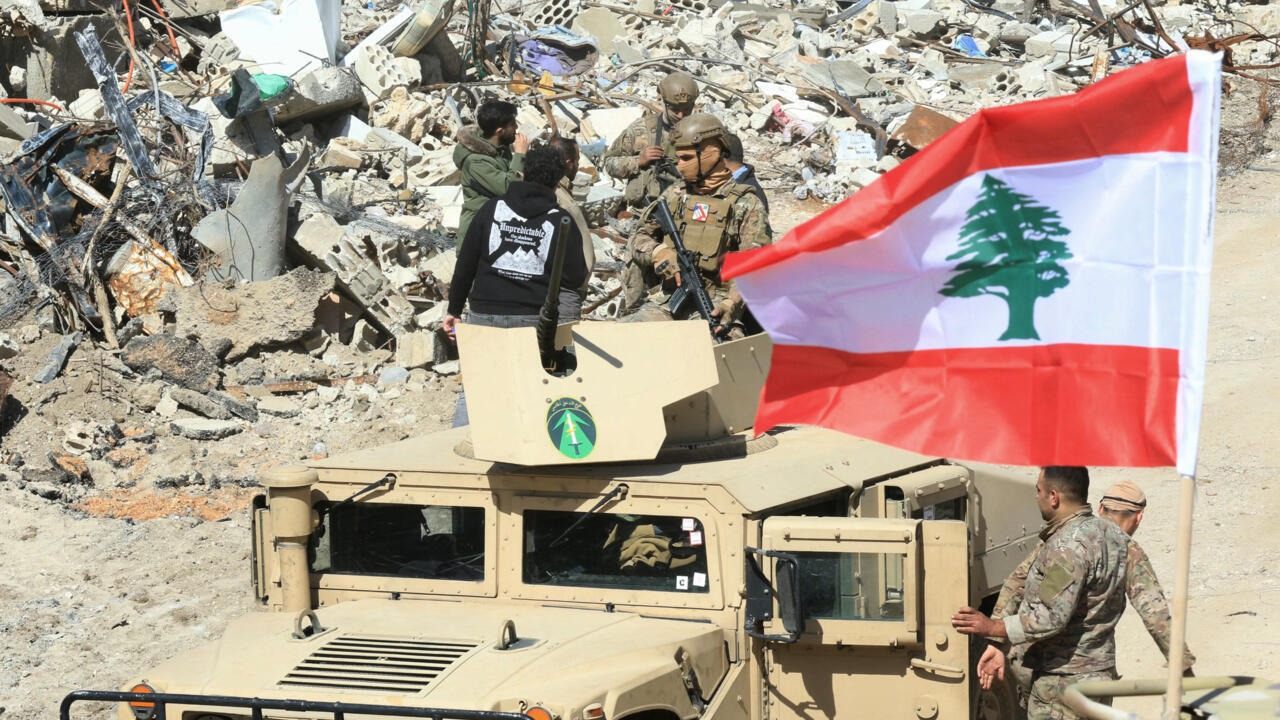
In Lebanon, it is not only the southern truce that is being tested, but the very idea of the state itself: can it monopolize security decisions, open a path to reconstruction, and rebuild legitimacy through financial and institutional reform? Or will every frontline incident threaten to implode a fragile “recovery,” while any stumble in reform drags the country back into stagnation and patronage?
In Syria, the transitional phase is weighed down by competing priorities: securing consensual political legitimacy, restoring national security and combating extremism, and launching recovery. Here too, the “temporary” risks becoming permanent - institutions without trust, security without accountability, and funding without transparency - or, at best, a slow process that exhausts public patience before satisfying donors.
These cases are neither marginal nor isolated. They represent a laboratory for the challenges facing the region as a whole: prolonged economic pressure, a large and youthful population with rising expectations, and climate change intensifying resource scarcity and the cost of disruption. Between a state burdened by obligations and societies demanding opportunity and services, legitimacy erodes when public policy is replaced by rhetoric and crises are treated as fate rather than choice.
As long as conflicts are not concluded by a final peace settlement or a decisive outcome, the region remains locked in vicious cycles. Mediators change, rules shift, and incentives fluctuate with sanctions, energy prices, and the involvement of major powers.
The Middle East thus oscillates between three broad equilibria: a cooperative balance, where de-escalation could evolve into regional political and economic arrangements; a conflictual balance, defined by proxy wars and cyclical retaliation; and a balance of structural disintegration, marked by the erosion of states and the rise of local actors competing for legitimacy.
More dangerously, transitions between these balances do not always require major strategic decisions. Sometimes a single incident, a chaotic election, or a poorly calibrated signal from a major power is enough to collapse a de-escalation marketed as a path to stability.
Two crises on the surface, and a deeper dilemma
On the surface, one crisis centers on Israel and Iran, along with their proxies, deterrence lines, and tested thresholds. The second is Gaza, a direct test of whether diplomacy can transform a fragile truce into a viable political arrangement.
Beneath this turbulence lies a deeper dilemma: legitimacy and sovereignty amid economic fragility and rising social demands. As state margins narrow, protests flare with every inflation shock, revenue decline, or service failure. Political systems respond with self-protection rather than reform, while the region continues to reward rhetorical rigidity over political pragmatism.
Washington’s signals: Influence without guarantees
Amid polarization at home and looming electoral cycles, the United States seeks to balance chaos management with the preservation of influence, relying on repeated “signals” - military backing here, diplomatic pressure there, or normalization pathways elsewhere.
But signals without follow-through do not create commitment. When regional actors sense a gap between rhetoric and action, they hedge: stockpiling arms, forging side deals, or engaging in calculated escalation to improve negotiating positions. In this sense, U.S. policy itself becomes part of the uncertainty, with every shift in Washington interpreted as a cue to raise deterrence or seek alternative arrangements.
Meanwhile, Iran and Israel continue testing each other’s thresholds. Iran recalibrates its deterrence while managing sanctions and ambiguity, a strategy that leaves ample room for miscalculation in a proxy-saturated environment. Israel, for its part, faces a threefold dilemma: domestic politics, partnership constraints with Washington, and regional calculations. A narrow security lens may deliver tactical gains, but often at high strategic cost.
Palestine, Iraq, and the economy of politics
In Palestine, division, conditional funding, and deteriorating security compound an old dilemma: missed opportunities and a shrinking political horizon as decision-making remains fragmented.
Iraq stands at a familiar crossroads as well - consolidating sovereignty and central decision-making, or continuing dual authority, increasing the risk of internal instability.
Across the region, political economy has become inseparable from security. Stabilization without economic prospects produces only “fragile stagnation.” The conflict now pivots between productive forces seeking rule of law and institutional stability, and rentier networks thriving on monopoly, patronage, and disorder, viewing reform as an existential threat.
Three scenarios for 2026
Three scenarios emerge for the year ahead:
Containment and inclusive growth, if international engagement translates de-escalation into durable arrangements and opens economic incentives for peace.
Escalation and disintegration, triggered by the collapse of proxy de-escalation, leading to eroded legitimacy, rising costs of living, and expanding roles for non-state actors.
Selective regional autonomy, marked by diversified partnerships and reduced external reliance, but fraught with coordination risks and the absence of a decisive crisis arbiter.
Ultimately, 2026 is neither a guaranteed war nor a promised peace. It is a contested arena of risks and opportunities. Without capable political elites willing to make difficult choices and rebuild legitimacy through governance, accountability, and people-centered policies, the Middle East will remain a theater of fragility, recurring failure, and conflict.
Disclaimer: The opinions expressed by the writers are their own and do not necessarily represent the views of Annahar