

Blockade in the Strait of Hormuz disrupts global shipping



 Messenger
 Whatsapp
 Threads
 Email
Email
 Print
Print
 X
X
 Facebook


Maha Kanj
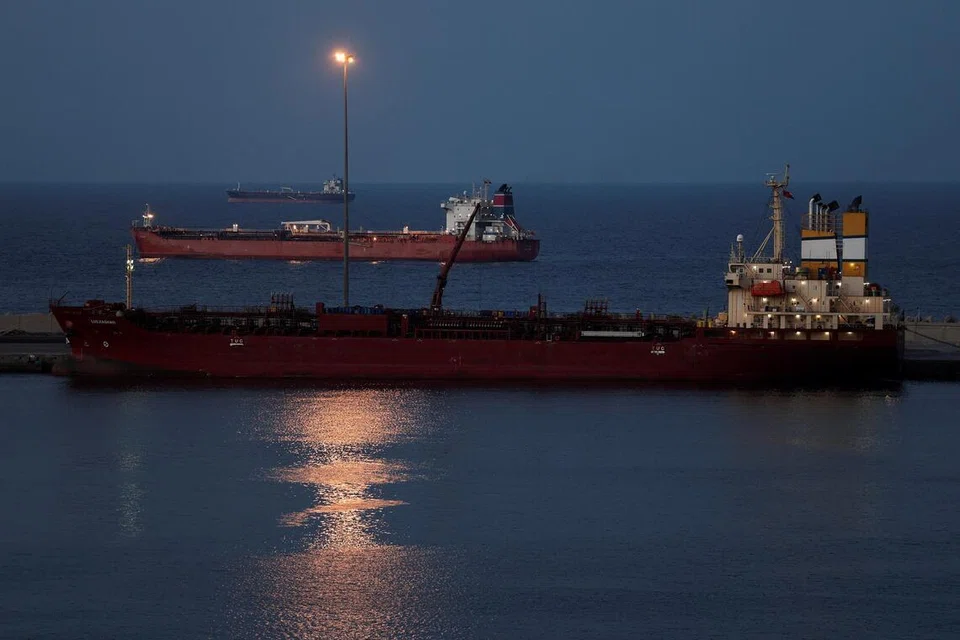
Amid escalating military conflict in the Strait of Hormuz, the region experienced an almost complete halt in ship movements, with thousands of tankers stuck and the flow of oil and goods disrupted, increasing pressure on global trade. MarineTraffic data showed that oil tanker traffic dropped by 90 percent compared to levels before the attacks, while shipping costs soared to record highs, according to the International Chamber of Shipping and marine insurance companies.
Emmanuel Grimaldi, Chairman of the International Chamber of Shipping, emphasized in a message dated March 5, 2026, the need to protect seafarers, noting that "freedom of navigation is vital for global trade, and crew safety must be a top priority."
Thousands of Ships Stuck with Direct Impact on Markets
Estimates from Clarksons Research indicate that around 3,200 ships have been affected by the crisis, representing about 4 percent of global shipping capacity. Tracking data also show that roughly 200 oil tankers and commercial vessels have either stalled or slowed down in the Gulf, causing logistical bottlenecks and a sharp rise in transport costs.
In an interview with Annahar, Dr. Patrick Mardini, CEO of the Lebanese Institute for Market Studies, said that the congestion directly affects oil headed to Asian markets, especially India, China, and Japan. He added that the prices of food and essential goods will rise due to higher shipping, insurance, and fees, including emergency charges, with tanker rentals reaching $400,000 per day.
Mardini also noted that global shipping companies have imposed additional risk-related surcharges on cargoes bound for the Gulf, which has in turn affected the prices of metals, consumer goods, and industrial materials such as petrochemicals.
Security Incidents and Major Shipping Company Moves
The region has witnessed serious incidents, most notably the targeting of the bitumen tanker Athe Nova by two drones, as well as two incidents off the coast of Oman that resulted in the death of a crew member.
In response to the risks, major companies such as Denmark’s Maersk and Germany’s Hapag-Lloyd announced they would reroute their ships via the Cape of Good Hope, a longer route that costs more time and money.
Global Economic Repercussions
The closure of the Strait threatens to trigger a wide economic shock. Qatar has shut its liquefied natural gas facilities, which account for about 20 percent of global gas exports, while Saudi Arabia’s largest oil refinery has halted operations. Disruptions have also been reported in oil and gas production in Israel and the Kurdistan region of Iraq.
Mardini’s View: Strategic Reserves Could Provide Short-Term Relief
Mardini believes that the strategic reserves of major oil-consuming countries could last three to five months if released, while military solutions, such as escorting ships with the US Navy, remain difficult to implement in practice.
He pointed to alternatives to bypass the strait, such as the Saudi pipeline to the Red Sea and the UAE pipeline to Fujairah, although the latter has been targeted by attacks. Qatar and Kuwait, however, face difficulties in finding effective alternative routes.
In the long term, US shale gas investments and improvements in Venezuela’s infrastructure could help increase supply and reduce pressure on global markets.
Mardini also emphasized that halts in oil and gas production or exports in strait-dependent countries like Kuwait, Qatar, and Iraq would cause significant budget losses. Saudi Arabia can offset some losses through exports from the Red Sea, while the UAE can partially compensate via continued exports from Fujairah.
He added that disruptions in maritime transport have immediate market effects, with gas prices in Europe rising between 40 and 60 percent, and in the UK between 90 and 96 percent.
Warning from Researcher Vidya Mani
Vidya Mani, a supply chain researcher at the SC Johnson College of Business at Cornell University, warned that restoring oil production after any stoppage would not be quick. It requires resuming drilling operations and bringing back workers who may have left during the conflict. She noted that continued tension could push oil prices to around $150 per barrel, with major economic repercussions for the global economy.
Record Jump in Shipping and Insurance Costs
The cost of chartering oil tankers has risen to unprecedented levels. Renting a supertanker from the Middle East to China now costs around $424,000 per day—four times the rate from a few weeks ago—with expectations of further increases if the conflict continues. Marine insurers have withdrawn war-risk coverage, and premiums have risen to about 3 percent of a ship’s value, compared to 0.25 percent before the crisis.
International Pressure and Alternative Shipping Routes
China has called on all parties to halt military operations immediately to protect navigation, while the United States temporarily eased sanctions on Russian oil to allow sales to India, in an effort to maintain supply flows.
US President Donald Trump announced that the Navy is prepared to escort oil tankers, despite the difficulty of providing full protection for all ships. Meanwhile, a senior commander of the Iranian Revolutionary Guard emphasized that no warship should approach within 800 miles of Iran.
The crisis has also affected other vital maritime routes, including the Suez Canal, Bab el-Mandeb, the Malacca Strait, and the Bosporus, where pressure on navigation has increased due to rerouting and heightened geopolitical risks.
Against this backdrop, the world is watching to see whether the Strait closure will continue and whether global energy markets can withstand the consequences of rising prices and tanker congestion in one of the world’s most important oil corridors. The crisis affects not only oil and gas but also container ships carrying essential goods—from furniture and clothing to food and building materials—placing the Strait of Hormuz once again at the center of the global economic equation.