

The Strait of Hormuz and Red Sea: Critical chokepoints threatening global energy
Delays in securing key maritime routes and ongoing Middle East tensions risk major disruptions to oil and gas supplies, with ripple effects on the global economy.



 Messenger
 Whatsapp
 Threads
 Email
Email
 Print
Print
 X
X
 Facebook
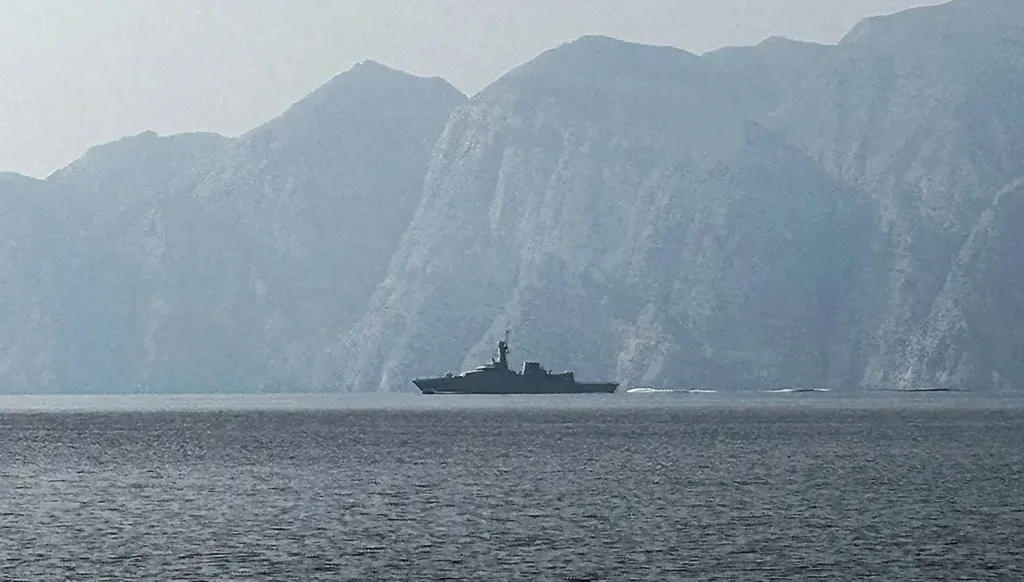


The Strait of Hormuz has returned to the forefront of global economic attention as the conflict between Iran, Israel, and the United States in the Middle East escalates. This is not only due to its geopolitical sensitivity but also because it is one of the world’s most important energy arteries. The strait connects the Persian Gulf to the Indian Ocean via the Arabian Sea and sees massive daily oil shipments, estimated at around 20 million barrels per day. This represents roughly 20 percent of global oil consumption and more than a quarter of seaborne oil trade, in addition to 20 percent of liquefied natural gas exports from Qatar. Therefore, any disruption in navigation through the strait is not viewed merely as a political or military event, but as a factor capable of directly shocking global energy markets and affecting the balance of the international economy. The annual value of the energy passing through this route is estimated at over one trillion dollars, reflecting the world’s heavy reliance on it as a primary channel for oil and gas exports from the Gulf to Asian and European markets.
In this context, a key factor heightening sensitivity is what can be described as US hesitation in addressing the security of navigation through the strait. The United States possesses the military and naval capabilities that make it the most influential player in protecting global trade routes. However, ambiguity or delays in taking decisive action increase market uncertainty. This uncertainty alone is enough to raise risk premiums on oil and gas prices, as markets have already begun responding to the crisis and even preemptively pricing in potential scenarios. In financial markets, even doubts about the security of the strait have prompted insurance companies to raise their premiums, which directly affects energy prices. As a result, prices have risen, reaching 120 dollars per barrel due to supply disruptions.
Concerns grow even further when the crisis is viewed from a broader perspective, where the disruption is not limited to the Strait of Hormuz. The possibility of Houthi involvement and threats to navigation in the Red Sea opens the door to a dual crisis that could affect two of the world’s most important maritime routes. The Bab el-Mandeb Strait, which connects the Red Sea to the Gulf of Aden, is itself a vital corridor for global trade, with between 12 and 15 percent of international maritime trade passing through it. It serves as the main gateway for ships traveling to the Suez Canal between Asia and Europe. Any disruption in this route could halt a significant portion of global trade and force ships to navigate around the Cape of Good Hope, increasing shipping costs and adding inflationary pressure on the global economy.
Economically, the danger of these developments does not lie solely in a complete stoppage of supplies but in the fragility of available alternatives. In recent years, Gulf countries have developed some pipelines that partially bypass the Strait of Hormuz, such as the Saudi pipeline transporting oil to Red Sea ports and the UAE pipeline reaching Fujairah Port outside the strait. However, the capacity of these alternatives remains limited compared to the volume of oil that passes through Hormuz daily. Even under optimal conditions, these pipelines cannot transport more than about 6.5 million barrels per day, less than 25 percent of the volume usually passing through the strait. Even when operating at full capacity, they would only be able to replace a small fraction of disrupted supplies in the event of a major crisis, leaving the global market with a significant supply deficit.
This limitation of alternatives makes markets extremely sensitive to security developments in the region. Even a slight increase in risk has prompted insurance companies to raise premiums sharply, while some shipping companies have avoided high-risk areas altogether. This, in turn, raises transportation costs and drives energy prices higher. With around 60 percent of global oil trade reliant on maritime transport, any disruption in these major sea lanes can rapidly move prices.
From this perspective, several potential economic scenarios can be imagined if the war continues. If the conflict remains short-lived, oil prices are likely to stay relatively high, ranging between 90 and 110 dollars per barrel due to elevated risk premiums. If a closure lasts between four and eight weeks, whether through Hormuz or the Red Sea, prices could rise to between 120 and 130 dollars per barrel, further increasing inflationary pressures on the global economy. The most severe scenario would involve a widespread disruption and prolonged closure of both the strait and the Red Sea, potentially cutting 20 to 25 percent of global oil supplies. Such an event could trigger a major energy shock reminiscent of the oil crises of the 1970s, pushing the global economy toward a sharp slowdown or even recession.
In conclusion, markets are concerned not only about a closure of the Strait of Hormuz or the potential closure of the Red Sea but also about the strategic uncertainty caused by US hesitation in securing navigation in the region. In a world heavily reliant on maritime transport for energy supplies, sea lanes become sensitive chokepoints where any disruption can reverberate throughout the global economy. With limited alternatives capable of compensating for the enormous volumes passing through these routes, the Strait of Hormuz and the Red Sea remain at the heart of the global energy equation, where prolonged disruption would have impacts far beyond the region, affecting markets and economies worldwide.