

Israel expands ground offensive as ceasefire talks remain deadlocked
With negotiations stalled and no ceasefire in sight, Israel deepens its military advance in southern Lebanon while seeking to strengthen its position on the ground ahead of any potential political settlement.



 Messenger
 Whatsapp
 Threads
 Email
Email
 Print
Print
 X
X
 Facebook
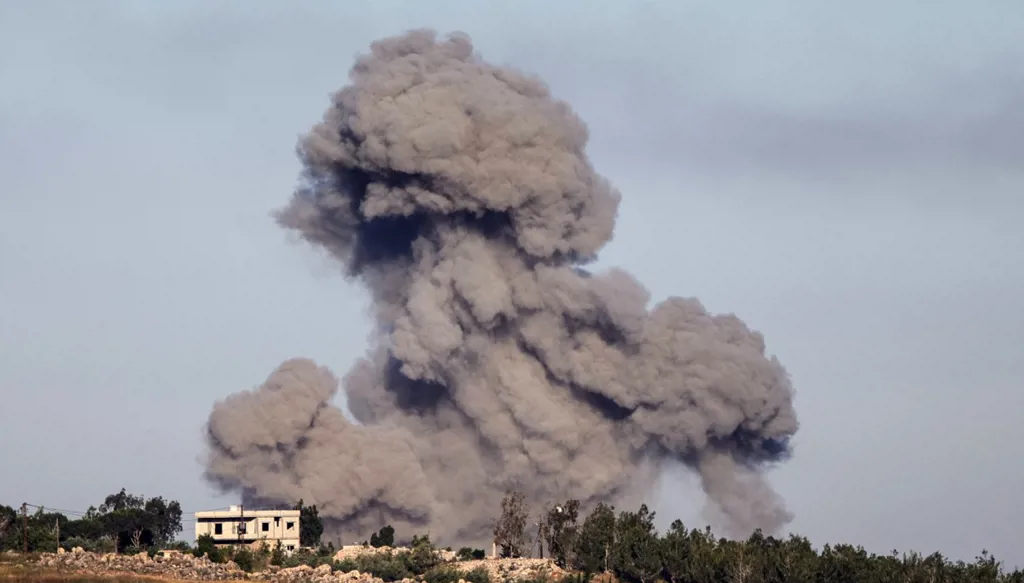


The security track meeting in Washington failed to produce any results regarding the ceasefire demanded by Lebanon. Instead, the issue was deferred to the political negotiations between Lebanon and Israel under US sponsorship.
This was followed by an Israeli escalation that crossed all red lines, including a ground advance north of the Litani River, particularly on the outskirts of Nabatieh, and the occupation of Qal'at al-Shaqif (Beaufort or Belfort Castle).
This indicates that Israel is expanding the war while carrying out systematic destruction and displacement of residents in an effort to impose a new reality that consolidates its occupation of an area extending beyond the Blue Line. Israel aims to place this territory on the negotiating table to secure its security and political demands from Lebanon.
There is little indication that Israel intends to stop its war on Lebanon. It continues to adhere to conditions that reportedly have US approval, most notably security coordination with the Lebanese Army to disarm Hezbollah and maintaining the buffer zone under Israeli supervision.
According to diplomatic sources, Israel is accelerating its military operations within a timeframe granted by the United States. It is seeking to achieve gains on the ground by occupying as much territory as possible and securing strategic positions overlooking towns in southern Lebanon, and potentially entering those towns before Washington imposes a ceasefire, whether through progress in negotiations with Lebanon or as a result of an understanding being reached with Iran.
Lebanon refuses to discuss any issues before a ceasefire is reached and continues to view negotiations as the only viable option given the high cost of the war. Its main hope remains that the United States will exert serious pressure on Israel. Otherwise, Israel is expected to continue its advance and create new realities on the ground that increase pressure on the Lebanese state and place it in a difficult position.
Diplomatic sources indicate that Israel has developed a plan to advance up to 40 kilometers, reaching the Awali River, or at least 30 kilometers to the Zahrani area, Iqlim al Tuffah, and the Western Bekaa, unless an unexpected US move compels the Netanyahu government to halt the war.
Given the conflicting demands of the Lebanese and Israeli delegations, a breakthrough in the negotiations is not expected. Diplomatic sources believe the talks are likely to remain deadlocked because of Israeli delays and its refusal to agree to a ceasefire. Such a ceasefire, if achieved, would give the Lebanese state greater room to operate in the south.
However, Israel remains determined to continue its military campaign and has informed the military delegation that the Lebanese state should adapt to the realities being imposed on the ground and coordinate with Israel on security and political matters. Israel is also demanding the disarmament and dismantling of Hezbollah.
As a result, a negotiated agreement remains distant, and this situation could lead to the entrenchment of a long-term occupation of a large area, even if Hezbollah continues its operations. Such a scenario could deepen internal tensions in Lebanon and lead to serious political and security confrontations among domestic factions.
The facts on the ground indicate that Israel is not expanding its ground operations in southern Lebanon without a green light from the United States, even if Washington is restricting it from striking Beirut. According to diplomatic sources, the main concern is the uncertainty surrounding the timeframe granted to Israel, whether in parallel with negotiations with Lebanon or developments on the Iranian track.
Israel could therefore take advantage of the deadlock in negotiations and repeat the experience of the 1982 invasion, when its operation against the Palestine Liberation Organization was initially limited to the Awali River but ultimately led to the occupation of Beirut. In its current advance, Israel first operated south of the Litani River, then moved north of the river toward Nabatieh after occupying Qal'at al Shaqif.
Between Debbine and other areas, it has focused on controlling dominant hills and high ground, while also advancing in the central sector from Ghandourieh and in the western sector toward the Al Qalileh coastal plain near Tyre.
The Israeli war continues to place pressure on Lebanon, while Hezbollah still appears to be relying on Iranian pressure to secure a ceasefire. Hezbollah is aware that even if a ceasefire is achieved, it would not by itself end the Israeli occupation of southern areas.
At the same time, it attacks and weakens the Lebanese state, adding to the pressure already being exerted by Israel. This helps explain why Lebanon remains committed to negotiations and has not abandoned its reliance on securing a supportive US position. For now, however, the situation remains in a state of uncertainty and waiting, raising the question of whether Lebanon will continue to be worn down until it reaches a point of collapse.
Disclaimer: The opinions expressed by the writers are their own and do not necessarily represent the views of Annahar.