

Beaufort Castle report sparks fears of escalation in southern Lebanon war
Amid reports of Israeli advances and mounting regional tensions, rare anti-war voices emerge from Lebanon’s south, challenging the dominance of armed narratives.




 Messenger
 Whatsapp
 Threads
 Email
Email
 Print
Print
 X
X
 Facebook
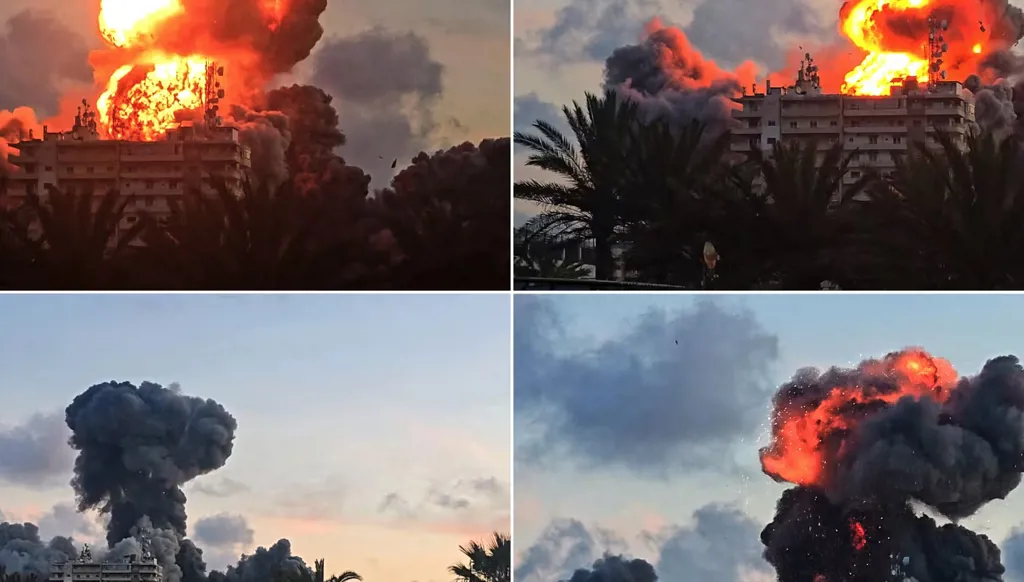


For Lebanese citizens to wake up to headlines announcing a military development that signals Israel’s occupation of Beaufort Castle, on the eve of the third month of the war that erupted on March 2 under the banner, slogan, and designation of “Iran’s Support,” is enough to instantly revive memories of previous occupations in the Lebanese collective consciousness—this time compounded by the catastrophic “Gaza model.” While Israel’s broad ground advance in recent hours will naturally create even harsher and more pressing realities for the Lebanese state, caught between the hammer of expanding Israeli military operations and the anvil of dependence on Iran embodied in all of Hezbollah’s military activities, this creeping Israeli operation and its repercussions should not distract from the emergence of a “rare event” that has pierced this alarming deadlock. Although it does not yet amount to a genuine turning point capable of meeting hopes for an internal transformation that could reverse the disastrous reality facing a stricken segment of Lebanese society, its significance remains notable.
What is meant here is the recent emergence of a protest movement against the war and those who ignited it, reflected in calls from the cities of Tyre and Nabatieh to disarm and place weapons exclusively under the authority of the Lebanese state. This may be a desperate and limited attempt to spare these cities from further catastrophic destruction. Whether this development will have a sequel that continues and evolves into a genuine third voice protesting death, war, occupation, and the calamity brought by weapons aligned with Iran, or whether it will be silenced under the intimidation of arms and those prepared to suppress any independent, free, and dissenting opinion, these calls emerging from the heart of Hezbollah’s most entrenched sphere of influence now reflect a growing reality that can no longer be concealed. This is especially true after southerners have endured successive war-related catastrophes, from the Israeli invasions of the 1970s until today.
At this moment, it may be overly ambitious to wager on a bold and daring uprising emerging from within the very environment, sect, and regions most affected by Hezbollah’s successive “support wars,” the most devastating of which is the current conflict. This war has brought with it some of the most dangerous forms of Israeli aggression, closely resembling the Gaza model. Nevertheless, the symbolism of these calls remains profound. They embody a long-awaited rejection of a fully authoritarian reality—a description that seems unavoidable after independent voices within the sectarian duality dominating the community were systematically crushed, leaving the party in particular to lead it into the current disaster. At the very moment calls were being made to liberate Tyre and Nabatieh from the grip of weapons, Israel was advancing to reoccupy a historic stronghold, 26 years after its withdrawal from southern Lebanon.
This is more than a symbolic paradox. The emergence of an independent third voice protesting domination and Lebanon’s subordination to weapons serving regional agendas has come late. Yet the tragic destruction inflicted upon dozens of cities, towns, and villages in the South, the southern suburbs, and parts of the northern and western Bekaa can no longer avoid the fundamental question of who will stop it. Meanwhile, the party that rejects any alternative voice continues to brand the state as treasonous, perhaps fearing that negotiations could prevent Israel from completing the devastation of what remains of the South or from returning to occupy territory beyond the Litani River. For this reason, the voice rising from the heart of the catastrophe, and from historic cities bearing the weight of repeated suffering, may prove louder and more consequential than the noise surrounding any other event. Such voices should not be dismissed.
Disclaimer: The opinions expressed by the writers are their own and do not necessarily represent the views of Annahar.