

Baghdad built of dates: A satirical vision of a city consumed by its own wealth
A popular Baghdadi poem by Mulla Abboud Al-Karkhi portrays Baghdad as a city constructed from its own abundance—dates, luxury, and contradiction—only to be consumed and dismantled by its people and history.



 Messenger
 Whatsapp
 Threads
 Email
Email
 Print
Print
 X
X
 Facebook
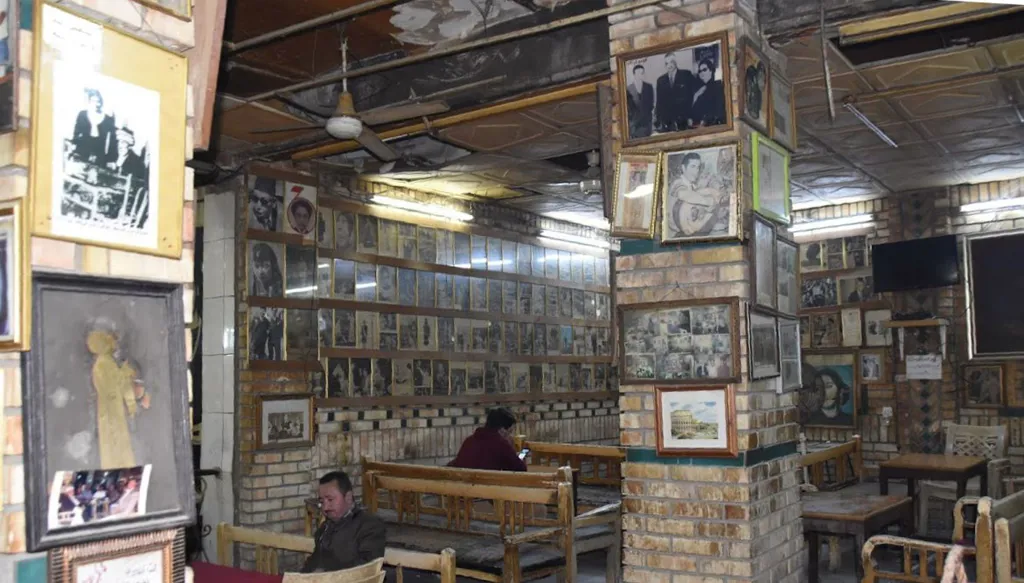


Baghdad was never a city of good fortune. When Al-Mansur chose it as the capital of his state, he surrounded it with fire to see the limits of its circle. When I was born in its center, precisely in Tayaran Square near its eastern gate, it did not extend more than two kilometers from the Tigris on the Rusafa side, ending at Bab Al-Sheikh. On the Karkh side, it did not exceed more than one and a half kilometers, ending at Karadat Maryam.
That is Baghdad, extending along the river from Kadhimiya to Zawiya in eastern Karada. A city that sleeps on the river. Rusafa was more generous to passersby, as it had two long roads that directly overlook the river and run alongside it, in Adhamiya and Abu Nuwas. Karkh, however, was stingy, offering only stretches that did not allow for ease of breath.
When Baghdad was Abbasid, all rule was in Rusafa. Bab Al-Wastani, its only remaining gate, is nothing but proof of that. Modern Baghdad, however, chose Karkh as the seat of its rulers, even though the cemetery of its kings lies in Adhamiya in Rusafa.
If Abdul Karim Qasim ruled Iraq (1958–1963) from the Ministry of Defense located in the Bab Al-Muadham area, one of Baghdad’s vanished gates in Rusafa, Saddam Hussein and the three presidents who preceded him ruled Iraq from Karkh. The Symphony Orchestra used to hold its concerts in Al-Shaab Hall, adjacent to the Ministry of Defense, the same hall that hosted the Mahdawi trial after 1958, a trial marked by a mixture of humor and brutality. Later, the Symphony Orchestra moved to Al-Khald Hall next to Karkh, the same hall that witnessed the sentencing to death of half the leadership of the ruling Baath Party in 1979.
Did the Iraqis consume the capital of their own country?
“Baghdad is built with dates / flash and fine khastawi,” is the opening of a famous poem by the Baghdadi poet Mulla Abboud Al-Karkhi. In this sense, did the people of Baghdad realize that their city was fragile and destined for ruin?
Much has been said in condemnation of Mu’ayyad al-Din Ibn al-‘Alqami, the minister of Al-Musta’sim, the last Abbasid caliph, and in accusing him of having facilitated the opening of Baghdad’s gates to Hulagu’s army. Yet historians affirm that Al-‘Alqami, who was negotiating with Hulagu in an attempt to save Baghdad, was betrayed by the caliph when he responded to the deception of those around him and declared defiance in the name of religion.
Did the same not happen in 2003, when Saddam Hussein refused to look at Baghdad as it sank into misery and preferred to hand it over as rubble, as he had promised in one of his speeches?
Metaphorically, Abboud Al-Karkhi reached a truth. Baghdad, the city whose primary building material is dates, was demolished by its own people, who love eating khastawi, a premium type of Iraqi date.
Speaking of dates, before the war with Iran, Iraq was known as the country of thirty million palm trees. At the same time, the population did not exceed 13 million. Today, as is often said without precise statistics, Iraq’s population exceeds 45 million, while the country is no longer mentioned among the top ten exporters of dates.
There are no fixed equations and no stable maps in Iraq. It is said that in pre-Islamic times people used to eat their gods because they were made of dates. So did Iraqis demolish the capital of their country in the same way?
Disclaimer: The opinions expressed by the writers are their own and do not necessarily represent the views of Annahar.