

Lebanon’s amnesty debate between sectarian pressures and state weakness
As political factions, prisoners’ groups, and sectarian interests clash over a proposed general amnesty law, the debate exposes Lebanon’s fragile institutions, unresolved grievances, and the state’s failure to move from conflict toward genuine national reconciliation.



 Messenger
 Whatsapp
 Threads
 Email
Email
 Print
Print
 X
X
 Facebook
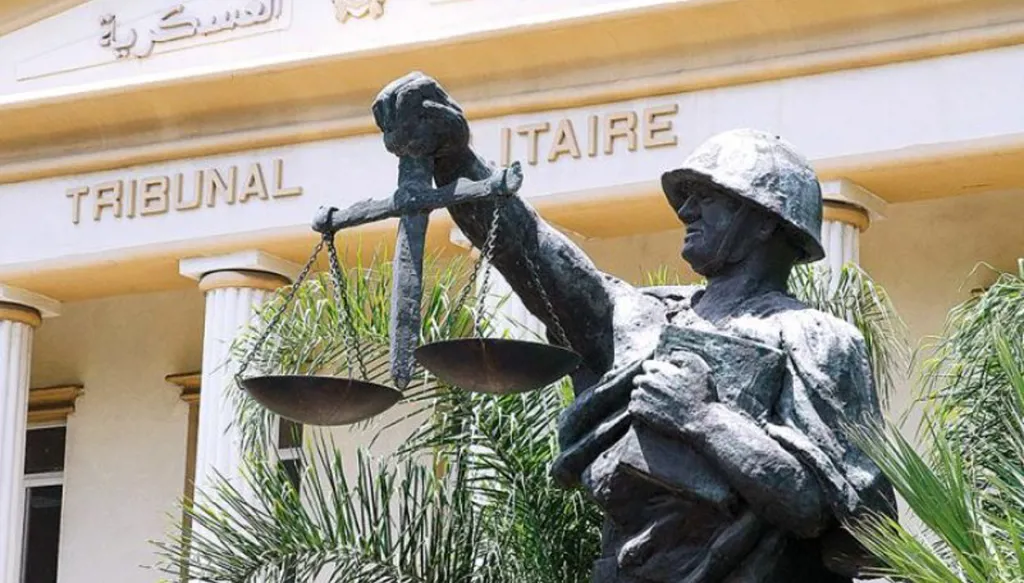


In February 2019, following numerous campaigns, the Lebanese government pledged in its ministerial statement to work on a general amnesty law. However, the years passed and the government’s promise remained nothing more than words on paper.
Yet the issue returned to the spotlight after parliament extended its own mandate for two additional years. The MPs whose terms were extended appeared to be trying to appease popular support bases that had been deprived of their right to go to the ballot boxes and elect representatives who might actually fulfill the promises made to them.
The story of the new amnesty law seemed to derive its legitimacy from widespread complaints in Lebanon about the performance of the military court, which has long been accused of being a compliant tool in the hands of Hezbollah. The party allegedly used it to pursue its opponents, including those who supported the Syrian revolution against Bashar al Assad’s regime. Complaints also focused on the failure to try eighty five Islamist detainees facing various charges, including clashes with the Lebanese army in Aabra, where a movement led by Sheikh Ahmad al Assir was crushed. Al Assir himself was later arrested while attempting to flee Lebanon in disguise.
What has so far prevented agreement on a general amnesty law is what one minister theoretically concerned with the file describes as “the prisoners’ lobby,” “Lebanon’s tribalism,” and “the victims’ lobby.”
Observers in Lebanon believe that the “prisoners’ lobby” is extremely powerful, as prisoners themselves, either directly or through relatives and acquaintances, maintain strong ties with the political class in general and with politicians from their own regions in particular. However, the problem with this “lobby” is that it includes different affiliations, interests, accusations, and crimes. Islamist prisoners, who are Sunni Muslims, have a completely different case from prisoners involved in drug cultivation and trafficking, the majority of whom come from the Shiite community in the Bekaa.
The claims of security and judicial injustice made by Islamist detainees do not generally apply to those detained in drug related cases. However, the latter speak of a different kind of injustice: the absence of balanced development, deprivation, poverty, and similar issues.
A third group of Lebanese, most of them Christians, also enters the picture: Lebanese exiles living in Israel.
Until the year 2000, these individuals were part of what was known as the “South Lebanon Army,” which emerged after Israel occupied southern Lebanon. When Israel withdrew, they fled to Israel out of fear for their lives and were unable to return to Lebanon because Lebanese law criminalizes their actions. They have since lived in Israel with their families, and most of them now hold Israeli citizenship.
The Proper Amnesty
If what we have called the “prisoners’ lobby” is powerful and benefits greatly from Lebanon’s sectarian and clan-based divisions, then it is clear that the story of the new amnesty law is rooted in the weakness of the state and its abandonment of its responsibilities. The inability of successive authorities to determine which groups should benefit from the amnesty in a way that safeguards the higher interests of the state, while leaving the various “tribes” to struggle among themselves, seems to stem from a deep internal conviction that when the state grants amnesty through laws and implementing decrees, it is first and foremost granting amnesty to itself.
Legal scholars around the world point out that amnesty laws serve national functions unrelated to grievances, negligence, or political appeasement. Rather, their purpose is to mark a state’s transition from war to peace, from periods of chaos to an era of order, and from the free operation of mafias and gangs to the authority of the state.
What these scholars describe does not currently exist in a way that would allow for an amnesty law capable of producing genuine national effects. Most of those who could be released would return to areas still suffering from deprivation, to institutions against which accusations of bias remain widespread, to state bodies that have not been reformed, and to a judiciary whose independence has not been secured.
This means that the sense of injustice the various “tribes” seek to address, under pressure from the “prisoners’ lobby,” still persists and will likely lay the groundwork for a future debate almost identical to the current one.
Disclaimer: The opinions expressed by the writers are their own and do not necessarily represent the views of Annahar