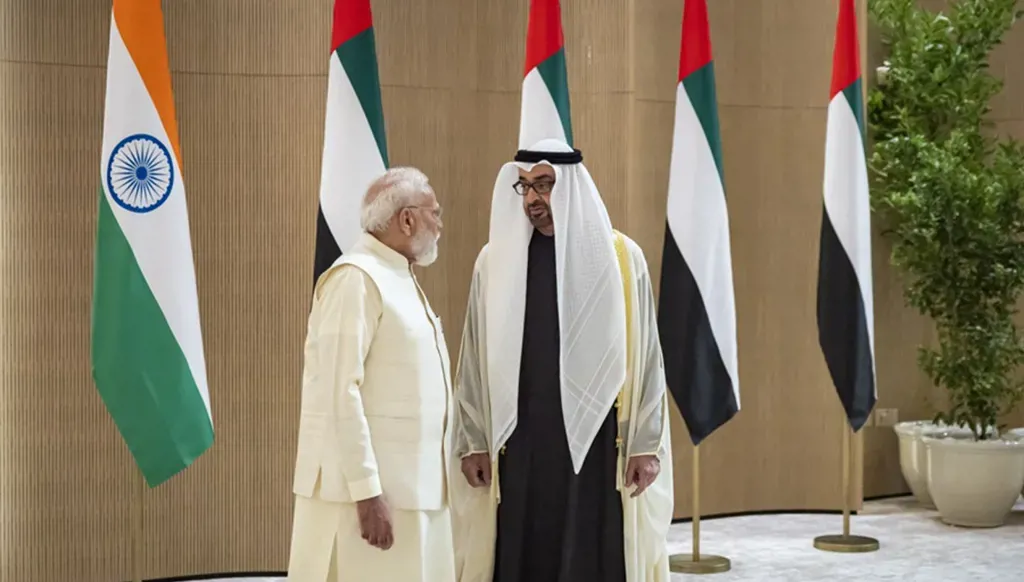
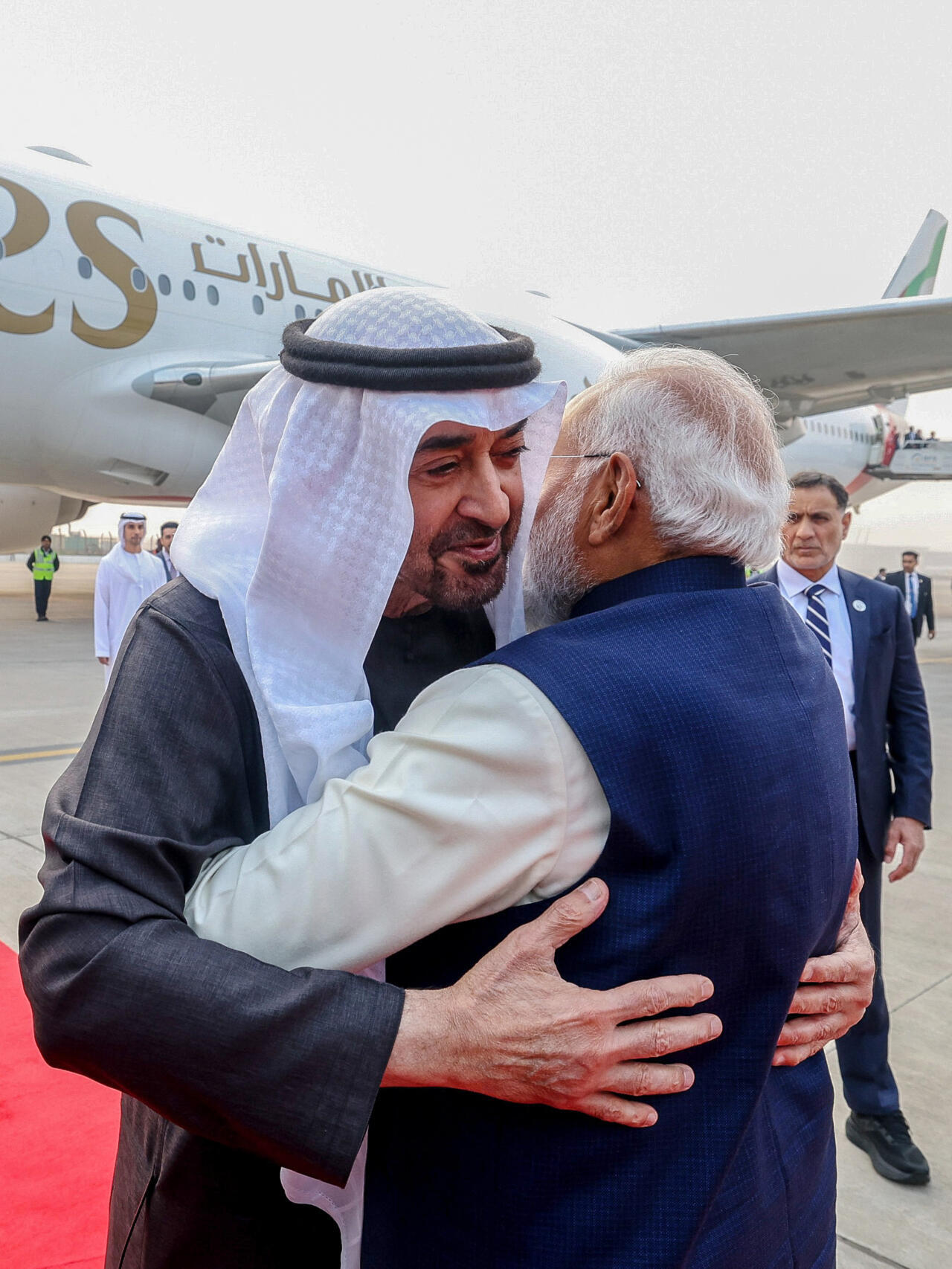
Indian Prime Minister arrives in the UAE on an official visit (WAM).
Trade relations between India and the United Arab Emirates have witnessed significant development in recent years and have expanded to a substantial scale, as the two countries plan to raise the volume of trade exchange to around 100 billion US dollars. This cooperation is based on several key pillars, most notably oil and liquefied natural gas, which are among the most important commodities the UAE exports to India.
On the other hand, India exports jewellery, pharmaceuticals, and electronics to the UAE. The UAE represents an important strategic partner for India, as it serves as a gateway to Gulf and African markets, in addition to being a key financial, logistics, and investment hub.
As for the UAE, it exports between 300,000 and 500,000 barrels of oil per day to India, making it among the top five energy suppliers to the Indian market. The UAE has also implemented an important strategic step in India related to oil storage, as ADNOC owns a storage facility inside strategic underground caverns in India. It is the only company that owns such a facility there, where it stores around 6 million barrels of oil.
Strategic agreements signed between the two countries have contributed to expanding this strategic reserve, with the renewal of existing agreements that date back around ten years. The UAE and India have also signed agreements for the supply of liquefied natural gas, and UAE LNG exports to India are expected to reach around 20 percent of ADNOC’s production by 2029. The value of India’s imports of Emirati LNG amounts to around 20 billion US dollars.
These agreements come amid the rapid growth of the Indian economy, which is considered one of the fastest growing economies in the world, in addition to being an open economy and a massive consumer market. With the UAE increasing its oil production capacity from 3.5 million barrels per day to 5 million barrels per day, it has become capable of meeting a significant portion of the growing Indian demand.
These relations are also particularly important in light of challenges related to the Strait of Hormuz, especially since a large portion of Iraqi oil was heading to India, which makes the UAE a safe and stable alternative. We have also seen the UAE announce new projects and transport lines from west to east, in addition to the development of Fujairah facilities, as part of a strategy aimed at diversifying energy export routes away from the Strait of Hormuz.
Sheikh Mohammed bin Zayed Al Nahyan President of the UAE and Narendra Modi Prime Minister of India (AFP)
In addition, there are major investments estimated at around 5 billion US dollars in sensitive technology sectors, financial services, and banking. Therefore, the UAE–India summit represented a key occasion to discuss energy and energy security issues, particularly in light of tensions related to the Strait of Hormuz, which have become a source of concern for many countries around the world.





 Messenger
 Whatsapp
 Threads
 Email
Email
 Print
Print
 X
X
 Facebook