“I can’t leave them behind”: A man’s war-torn escape to save his dogs in southern Lebanon

Lifestyle 14-05-2026 | 11:43

“I can’t leave them behind”: A man’s war-torn escape to save his dogs in southern Lebanon

Amid air raids and destruction, a Lebanese man risked his life under fire—not for himself, but to refuse leaving his dogs behind, revealing a deeply human story of survival, loyalty, and love during war.


“I can’t leave them behind”: A man’s war-torn escape to save his dogs in southern Lebanon
Zaher Haidar (Annahar)
Smaller Bigger

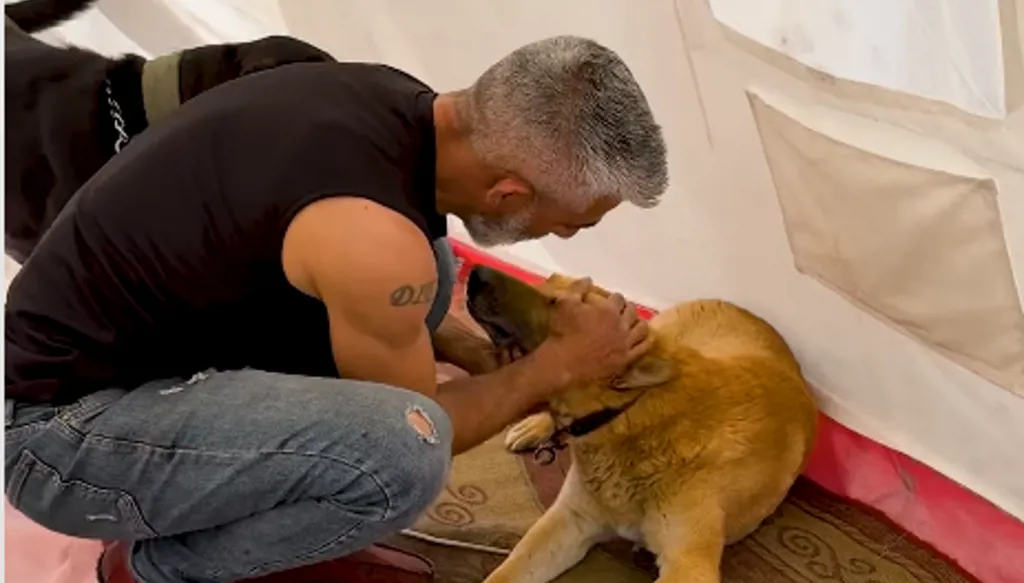
Amid the sounds of air raids and the smell of death, Zaher Haidar did not think of himself first, but of his dogs.
 

A man from the southern town of Blat, who raises dogs and considers them part of his daily life, found himself trapped in his hometown during the war as raids drew closer and closer to his home. However, for him, it was not just a matter of personal survival, but a struggle to stay with his “companions,” whom he refused to leave behind.


Haidar tells Annahar: "If my dogs died, I wanted to die with them," a sentence that sums up the attachment he had with his animals and reveals a rare humane side amid scenes of destruction and displacement.


During the truce period, he decided to return to his town of Blat to check on his home and his dogs. The town had no livable conditions: no movement or security, only abandoned houses, traces of shelling, and a constant fear of renewed raids. After a few days of staying there, everything changed in an instant.


He recounts that he was inside his house when he heard a massive explosion outside and rushed out to find a burning car charging towards his house gate, followed by intense raids on the town. "I was sitting at home... a raid here and a raid there," he says, recalling the heavy hours of siege he endured alone.


He tried to communicate with UNIFIL forces and Lebanese Army Intelligence to evacuate him from the area, but entering the town was not easy due to the security situation. Long hours of fear passed over him while his dogs stayed by his side “to keep him company,” as he puts it.


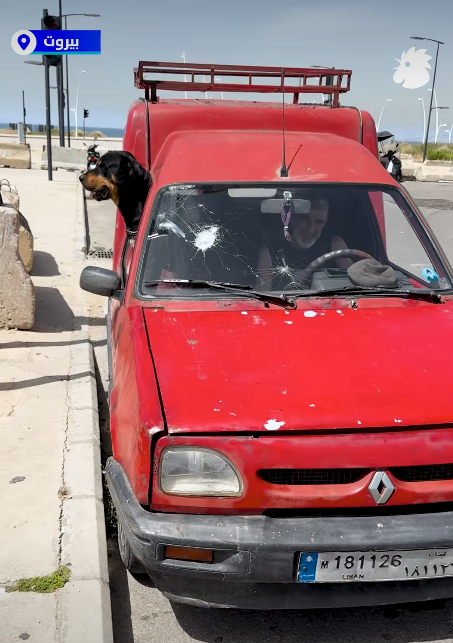
At night, he received a call informing him of the possibility of evacuation. At that point, he put his dogs in iron cages in preparation for departure, but the surprise came when a military officer informed him that removing the cages from the town in his personal car, a “Rapid,” which had a bad reputation in the south due to frequent targeting by Israel, posed a great risk, and that he should leave without them.


Here, Zaher did not hesitate much. He says: “I can’t go without them.” The soldiers left, while he returned once again to the car and the cages, risking his life under the bombing just so he wouldn’t leave his dogs behind.


To him, the animals were not an additional burden in the war; they were part of his psychological and humane survival.


He finally succeeded in leaving the town with his dogs safe and sound, and he describes that moment by saying: “There I felt like I was born again.”

Zaher Haidar (Annahar)


Today, Zaher lives far from his home where he was “honored and respected,” as he puts it, but he still refuses to return in the absence of any genuine security guarantees. To him, the war did not only threaten humans but also placed animals at the heart of the tragedy.


He concludes his talk by confirming that his return to his town is linked to his feeling of security, not just for him, but “for the animals and the people living above,” in a scene that summarizes how war can drive a person to cling to what they love, even amid debris, danger, and death.