

Iraq’s Prospective Prime Minister, Ali Al-Zaidi, Faces the Challenge of Balancing Domestic Stability and Regional Pressures
Amid sectarian divisions, regional rivalries, and international expectations, Iraq’s potential new prime minister, Ali Al-Zaidi, is expected to navigate complex political, economic, and diplomatic challenges.



 Messenger
 Whatsapp
 Threads
 Email
Email
 Print
Print
 X
X
 Facebook
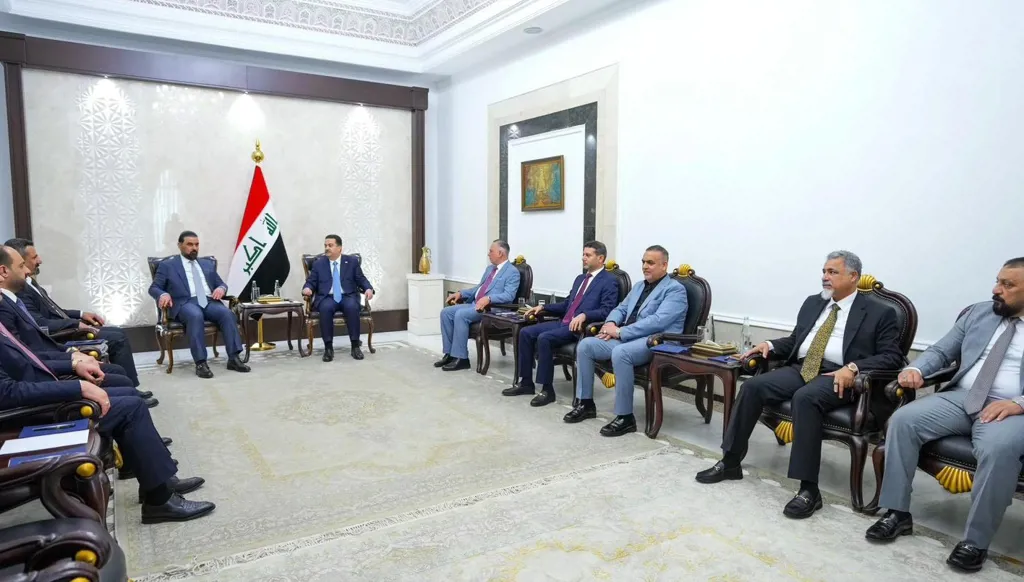


The appointment of a figure like Mr. Ali Al-Zaidi to form the new Iraqi government raises complex questions that extend beyond the domestic context and into broader regional and international calculations. In a turbulent internal environment marked by intertwined political and sectarian balances, and amid rising regional tensions, any candidate for the Iraqi prime ministership is expected to present a coherent vision that combines political realism with the ability to build trust.
The first expectation of Mr. Al-Zaidi is the ability to secure a minimum level of internal consensus. Without such consensus, external support would have little real impact. This requires a unifying national discourse that goes beyond traditional divisions, along with practical steps to reassure different political forces, whether through a fair distribution of responsibilities or through a clear reform agenda addressing urgent issues such as corruption, unemployment, and weak public services.
What are Arab and International Actors Requiring from Al-Zaidi?
On the Arab level, Mr. Al-Zaidi is expected to demonstrate a balanced openness aimed at rebuilding bridges of trust with Iraq’s regional environment, without being drawn into competing regional axes. Arab countries generally view internal stability as a prerequisite for meaningful cooperation; therefore, his success in consolidating stability will be essential for securing Arab support, both politically and economically.
International acceptance is closely tied to the extent to which the next government adheres to principles of good governance, respects international agreements, and ensures a secure and stable environment for investment. In addition, the ability to manage relations with major powers with flexibility and realism, while preserving national sovereignty, is a key factor in securing this acceptance.
However, the most significant challenge may lie in the conditions set by the United States, which represent a substantial test for the government. These conditions particularly touch on sensitive issues related to the presence of armed factions and the Popular Mobilization Forces, the problem of dollar smuggling, and Iraq’s relations with Iran, especially in light of the current regional dynamics and Baghdad’s relationship with Erbil.
All of these issues require careful consideration and strong political judgment, as well as an influential political team capable of persuasion rather than confrontation. Many of these files were previously postponed due to their sensitivity, but the current international and regional circumstances make addressing them increasingly necessary.
Al-Zaidi's Internal and External Calculations
Yet the greatest challenge also lies in reconciling these different levels. Meeting internal expectations may at times conflict with external requirements, and vice versa.
For this reason, Mr. Al-Zaidi would need a high degree of political skill to navigate within a narrow margin, while maintaining clarity of vision and consistency of objectives. At the same time, the available time to implement these complex issues on the ground is unlikely to be open-ended.
In conclusion, Mr. Al-Zaidi’s success does not depend solely on his personal capacities, but also on his ability to form a cohesive government team, establish a workable and implementable program, and manage political balances with prudence. Given the current complexities, any uncalculated step could deepen crises rather than resolve them, making the role of the prime minister one of the most challenging positions at this stage.
Disclaimer: The opinions expressed by the writers are their own and do not necessarily represent the views of Annahar.