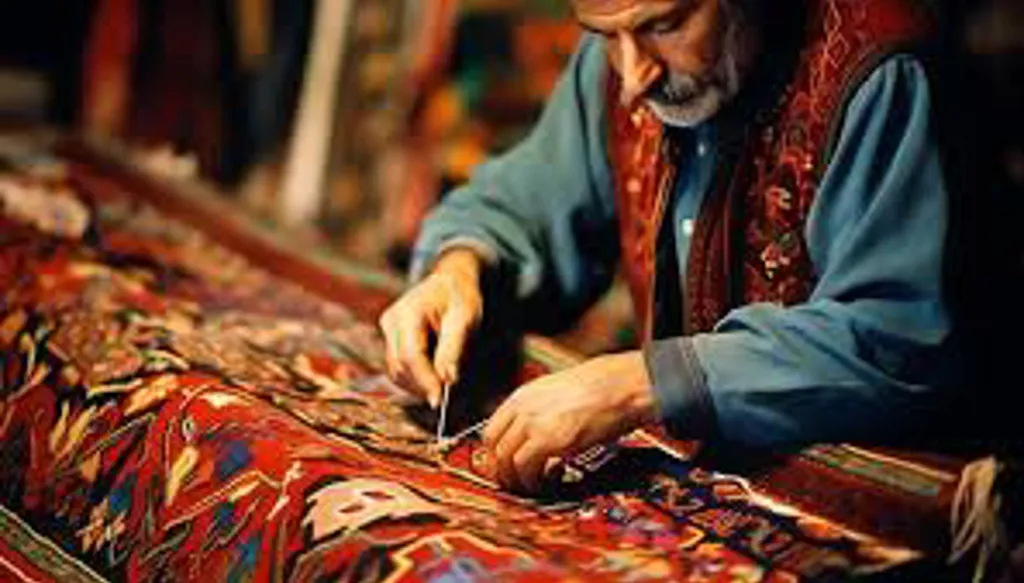
Since Iran entered our daily lives, the story of the Persian rug maker has come along with it. Every writer, speaker, or broker insists on using the rug maker’s patience as an example: thread by thread, day after day, sometimes year after year, with no complaints or impatience.
The wisdom drawn from the rug and its maker is that the patient Iranian will eventually be the winner in any conflict, whether over a piece of land or the flow of the Nile.
The story of the rug turned many colleagues into experts on Iranian affairs and trusted sources on Persian poetry.
I try to avoid drawing from an overcrowded source and strive to find alternatives. Often, I find myself escaping from a colleague who repeatedly tells himself, me, and the world about Iran’s strategic patience.
Yet recent events have trapped me in a dilemma: how to talk about the Iranians’ endurance and repetition without referring to the great heritage? Have we forgotten that the most famous listener and storyteller in history were from Persia—Shahryar and his night companion Scheherazade, A Thousand and One Nights, night after night, or after Layla.
For those interested in proverbs, I finally found an example of the skill of the Iranian merchant in rugs, fabrics, and shawls (the Persian shawl). In his book The Journey to Baghdad, 1834, traveler James Fraser describes the difference between Turkish and Iranian merchants in the markets of Baghdad. The former is calm, does not bargain or speak much; “if it were an Iranian merchant, they would ask you a dozen questions about what you want, offer you consecutively fifty things you do not need, jump around and back repeatedly,” trying to convince you to buy what you do not need.
This behavior in the markets of Baghdad reminds one of how Iranians negotiate political issues today. Between the rug maker and fabric seller, there is back and forth, bargaining, and persistent attempts to convince you to buy what you don’t want or need.





 Messenger
 Whatsapp
 Threads
 Email
Email
 Print
Print
 X
X
 Facebook