

The Strait of Hormuz: Between fragile calm and global energy risk



 Messenger
 Whatsapp
 Threads
 Email
Email
 Print
Print
 X
X
 Facebook
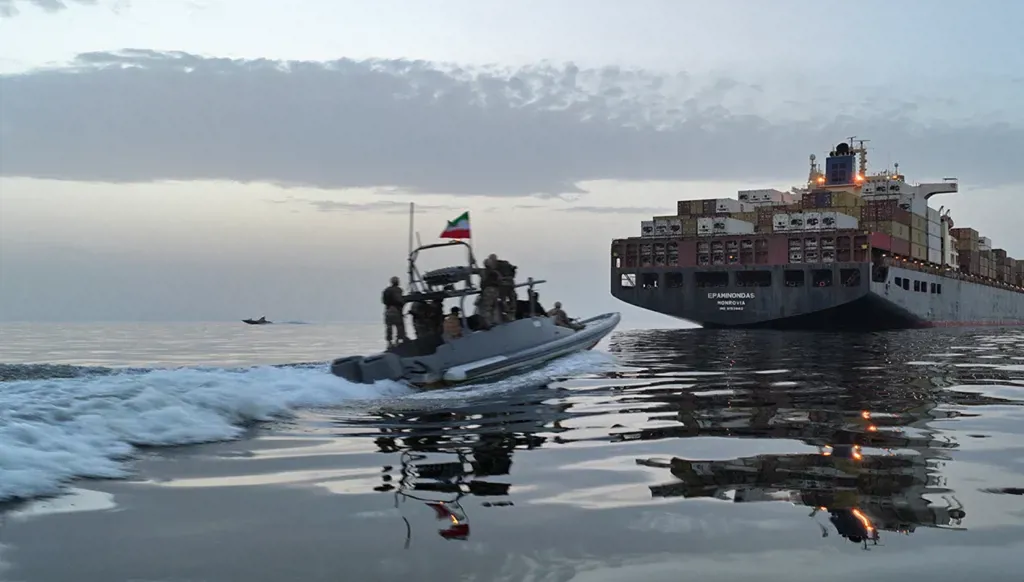


The Strait of Hormuz is no longer merely a regional flashpoint. It has become a real test of the world’s ability to protect the most important energy artery.
With tensions continuing through April 2026, the strait appears stuck between two conditions: no full-scale war and no real stability, but rather a grey zone governed by uncertainty and risk.
The danger of the situation lies in the fact that the problem is no longer purely military, but primarily operational and economic.
Even with talk of a ceasefire, naval mines, unclear routes, and insurance concerns continue to disrupt the return of normal shipping. In simple terms, the strait is not closed by a political decision alone, nor opened by a diplomatic statement, but only when markets regain confidence in the safety of passage.
The United States' approach, based on unilateral action and displays of force, appears to have limited effectiveness. Sensitive international waterways are not managed through power alone, but through complex collective arrangements that balance security, law, and trade. The current experience confirms that deterrence alone is not sufficient to restart maritime traffic of this scale.
Building a cooperative framework
Here, the European role stands out as a different option. Instead of escalation, Europe seeks to build a cooperative framework based on freedom of navigation, legal legitimacy, and maritime coordination. The summit held in Paris with the participation of dozens of countries reflects this direction, focusing on reopening the strait without conditions and preparing to form an international mission to protect navigation.
Europe’s strength does not lie in military superiority, but in its understanding of the nature of the crisis. Restoring stability requires an integrated system that includes mine clearance, securing shipping routes, providing guarantees for shipping and insurance companies, and establishing legal clarity that strengthens trust. It is a process of rebuilding confidence as much as it is a security operation.
However, the limits of the European role remain clear. Europe alone cannot impose stability if escalation between the United States and Iran continues. The success of any collective initiative also depends on the ability of major powers to avoid sliding into a wider confrontation.
Reliance on the Strait remains indispensable
The current scene indicates a pattern of uncertainty, where navigation continues in a limited form under costly precautionary measures, while markets remain in a constant state of anticipation. In such a reality, the goal is not to fully end the crisis, but to manage it and reduce its consequences.
This crisis may accelerate the search for alternatives to the Strait of Hormuz, whether through new transport routes or greater reliance on renewable energy.
But until then, the strait will remain an indispensable element in the global energy equation.
The question is not who controls the Strait of Hormuz, but who can make it safe and usable.
Here Europe may have a real opportunity to present a different model for crisis management, based on cooperation rather than confrontation.
A potential success of this model may not end the crisis, but it could prevent it from turning into an open global catastrophe.
Disclaimer: The opinions expressed by the writers are their own and do not necessarily represent the views of Annahar.